Corporate B2B Websites
Industrial & Agricultural B2B Catalog Architecture: Showcasing Complex Equipment & Commodities Without Losing 40% of Wholesale Orders
Why Chief Engineers and Procurement Committees Close Your Website in 15 Seconds Without Calling Sales
Across heavy manufacturing, industrial machinery, chemical processing, and commercial agribusiness, a dangerous misconception persists: executives assume enterprise buyers always place orders via phone calls to account managers, so uploading a single 45 MB 'Download PDF Price List' button is enough. Benchmark research by Gartner and McKinsey in 2025–2026 proves the exact opposite: 70% to 75% of B2B buyers (mechanical engineers, plant technologists, and procurement officers) demand self-service digital evaluation during supplier shortlisting and spend only 17% of their total buying journey speaking with sales reps. When you neglect industrial product catalog web design or postpone modern agricultural equipment website design, forcing buyers to dig through unindexed PDFs costs your enterprise up to 40% of inbound Request for Quote (RFQ) opportunities.
Over 14 years of architecting high-density commercial systems, I have audited dozens of factories where senior sales engineers spend 5 hours a day answering repetitive phone calls about pipe wall thickness, grain moisture tolerances, or industrial pump flow rates instead of closing six-figure supply contracts. In this guide, we break down b2b manufacturing catalog architecture, optimize technical specification sheet download ux, and demonstrate through verified portfolio case studies how complex product filtering for industrial distributors pays back its $4,500–$12,000 engineering budget within the first two wholesale shipments.
The Death of the PDF Price List: Why Static Scanned Documents Cost You 40% of Direct Wholesale Orders
When a steel fabricator, polymer supplier, or agrochemical distributor publishes a monolithic PDF brochure or downloadable Excel sheet instead of an interactive web catalog, they cut themselves off from organic search intent and field engineers. Static documents create three fatal bottlenecks in modern B2B distribution.
1. Zero Search Engine Visibility for High-Intent Part Numbers and ISO/ASTM Specs
Industrial procurement specialists never search Google for vague phrases like 'buy factory equipment.' They query exact technical attributes: DIN/ISO part numbers, steel alloy grades, 900 g/m² PVC membrane density, or active herbicide formulations. Unless every product series and technical SKU has a dedicated, indexable URL with structured HTML specification tables and `Schema.org/Product` markup, search engines remain blind to your inventory. Competitors with structured web catalogs capture 100% of this high-margin, bottom-of-funnel organic traffic.
2. Mobile Paralysis on Construction Sites, Factory Floors, and Farm Fields
Picture a chief agronomist in the field or a site engineer on a construction rig trying to verify flange dimensions or chemical application rates on a 375px smartphone over cellular 4G. Downloading a 30 MB, 60-page PDF and pinch-zooming across tiny columns causes 62% of mobile B2B visitors to abandon the document within 12 seconds. Instead of wrestling with your file, they switch to a competitor's mobile-responsive catalog and submit a bulk quote request in two taps.
3. Side-by-Side Comparison: Static PDF Catalogs vs. Interactive B2B Web Architecture
Below is an operational and financial comparison of static document downloads versus an engineered B2B product catalog. Explore our full engineering deliverables inside the Corporate B2B & Export Websites hub.
| Evaluation Metric / Business Impact | Legacy Approach: Downloadable PDF / Spreadsheet Price List | Engineered Approach: Interactive B2B Web Catalog (PIM/ERP Sync) | Direct Impact on Revenue & Operations |
|---|---|---|---|
| Google Indexing for Part Numbers & ISO Specs | Near 0% (search crawlers rarely rank buried PDF rows) | 100% SKU Coverage (dedicated indexable URLs per series/spec) | +210%–340% growth in high-intent organic B2B traffic |
| Time for Engineers to Locate Exact Spec | 8–15 minutes (manual scrolling and cross-referencing) | 15–30 seconds (instant faceted filtering & fuzzy SKU search) | Lifts visitor-to-RFQ conversion rate from 0.6% to 2.2%+ |
| Mobile Field Usability (375px Viewport) | Unusable (requires heavy downloads and horizontal zooming) | 0.9s SSR load, responsive spec cards, sticky RFQ actions | Captures +45% more mobile B2B leads from field engineers |
| Spec, Tolerance & Inventory Accuracy | Outdated within weeks of exporting the PDF file | Automated ERP/PIM sync every 15 minutes via REST API | Eliminates quoting errors and compliance disputes |
| Inside Sales Engineering Workload | 60% of rep time wasted reading basic specs over the phone | Sales receives pre-configured multi-SKU RFQ manifests | Cuts formal quote turnaround from 24 hours to 25 minutes |
Industrial Product Detail Page (PDP) Anatomy: CAD Drawings, Quality Passports, Chemical Composition & Certificates
Unlike retail e-commerce where shoppers buy impulsively based on lifestyle photography, B2B procurement involves a multi-role buying committee: design engineers validate dimensional tolerances, plant technologists inspect chemical composition, and compliance officers verify ISO/REACH certifications. A high-converting industrial PDP must function as a comprehensive digital engineering passport.
1. The Above-the-Fold 'Engineering Trinity' and Frictionless CAD/Datasheet UX
According to Thomasnet industrial buying studies, over 78% of design engineers refuse to specify a component into a bill of materials (BOM) if 2D/3D CAD models or dimensional drawings are missing from the manufacturer's website. Optimizing technical specification sheet download ux requires three elements above the fold:
Exact Identification & Compliance Standards: prominent SKU/part number, ISO / DIN / ASTM compliance badges, and real-time production status (In Stock for Immediate Dispatch vs. Built-to-Order in N Days).
In-Page SKU Variant Matrix: instead of forcing buyers to click through 40 separate pages for different pipe diameters or film thicknesses, embed an interactive variant table where engineers can select quantities across multiple dimensions and add them to a unified RFQ cart.
1-Click Technical Asset Downloads: instant download triggers for `.STEP`, `.DWG`, and `.DXF` CAD assemblies, Material Safety Data Sheets (MSDS/SDS), Certificates of Analysis (COA), and installation manuals. Never hide basic PDF datasheets behind an 8-field lead form—offer un-gated spec downloads to build immediate engineering trust, and capture lead details when the buyer requests a bulk quote or custom assembly.
2. Case Study — WashService: Structuring Industrial Equipment Verticals and Turnkey Wash Complexes
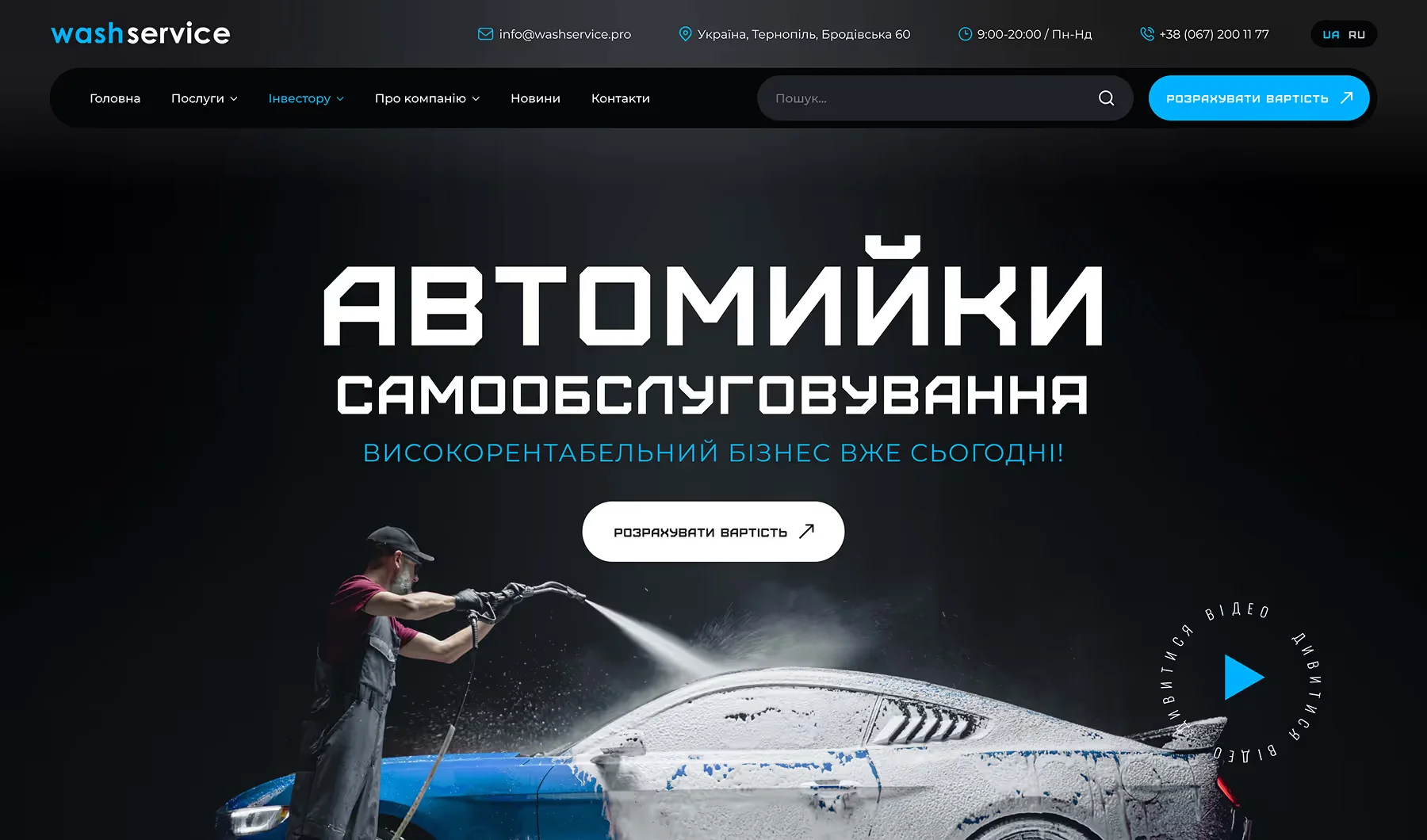
A clear example of organizing complex industrial hardware and turnkey construction solutions is the corporate portal we designed for WashService, an engineering company that supplies European high-pressure wash equipment and builds turnkey self-service car wash complexes (over 60 completed facilities).
The core architectural challenge was serving two distinct B2B buyer personas simultaneously: capital investors seeking turnkey facility construction or reconstruction, and chief engineers sourcing specific hardware subsystems (high-pressure pumps, reverse osmosis water treatment, dosing stations, winter anti-frost loops, and electronics). On the main screen, we eliminated dense text blocks and established a clear visual hierarchy of engineering verticals: visitors immediately identify core capabilities above the fold and navigate in one click to detailed equipment breakdowns or the full portfolio case:

Parametric Filtering for Engineers: Selecting by Load, Fraction, Moisture, or Dimensional Tolerance
When a b2b manufacturing catalog architecture spans 300 to 15,000+ technical SKUs—such as high-pressure industrial pumps, elevator assemblies, bearings, or bulk agricultural commodities—standard category folders fail. Engineers do not browse by marketing collection names; they filter by strict physical and operational constraints.
1. Faceted Parametric Search and the Zero Dead-End Rule
Mastering complex product filtering for industrial distributors relies on three engineering UX standards:
Filtering by Physical & Chemical Units: replace generic checkboxes with numeric range sliders and exact-value inputs for operating pressure (bar), power output (kW), flow rate (m³/h), grain fraction (mm), moisture/impurity percentage (%), or voltage.
Dynamic Attribute Disabling (Zero Dead-End Rule): amateur catalogs let users select four checkboxes, click 'Apply,' and hit a frustrating '0 Products Found' screen. In our reactive frontend architecture, every filter selection recalculates compatible attributes in under 50 milliseconds, graying out impossible combinations and displaying a live counter on the action button ('Show 14 Matching Models').
Shareable Parametric URL States: every multi-attribute filter combination generates a clean, indexable URL parameter string so lead engineers can share exact filtered views with procurement colleagues on Slack or email without re-entering constraints.
2. Side-by-Side Spec Comparison Matrix and Tender BOM Export
During final vendor shortlisting, design engineers rarely select a single unit in isolation—they must justify their selection to the CFO or procurement committee by comparing 3–4 candidate models side by side.
Instead of forcing engineers to open five browser tabs and copy-paste specs into Excel, we build a synchronized comparison matrix directly into the catalog:
1-Click 'Highlight Differences Only' Toggle: collapses identical rows (such as base voltage or ISO compliance) and highlights critical engineering variances—peak load ratings, seal durability, mounting dimensions, and lead times.
Sticky SKU Headers on Scroll: keeps model numbers, thumbnail diagrams, and 'Add to RFQ' actions locked at the top of the viewport while scrolling across 40+ technical rows.
Branded PDF/XLSX Comparison Export: generates a clean comparison manifest with manufacturer credentials that procurement officers can attach directly to internal tender documentation.
The 'Request Batch with Freight' CTA: Calculating Site Delivery Logistics Directly on the Website
In heavy manufacturing, industrial equipment supply, and bulk agricultural trading, the factory gate price (EXW) is never the final decision metric. Specialized freight logistics or turnkey site installation often account for 15% to 35% of total contract cost.
1. Why Retail 'Add to Cart' Buttons and Generic Callback Forms Fail in Wholesale B2B
When an agribusiness director or EPC procurement manager sees a consumer-style 'Add to Cart' button that ignores Minimum Order Quantities (MOQ), 15–40 ton grain hopper capacities, or regional freight rates, they cannot complete an order. Conversely, a generic 'Leave your phone number' form creates friction because buyers need landed budget estimates immediately.
The solution is an interactive Batch RFQ & Project Configurator: buyers select the crop or equipment package, input required tonnage or bay count, specify their delivery destination, and instantly preview logistics calculations and a structured RFQ manifest.
2. Case Study — JetAgro: Geospatial Elevator Selection, Grain Quality Passport & Mobile Freight Bidding
Effective agricultural equipment website design and commodity platform architecture must account for field conditions: farm owners, agronomists, elevator managers, and grain carriers operate primarily from smartphones while in the field or on the road.
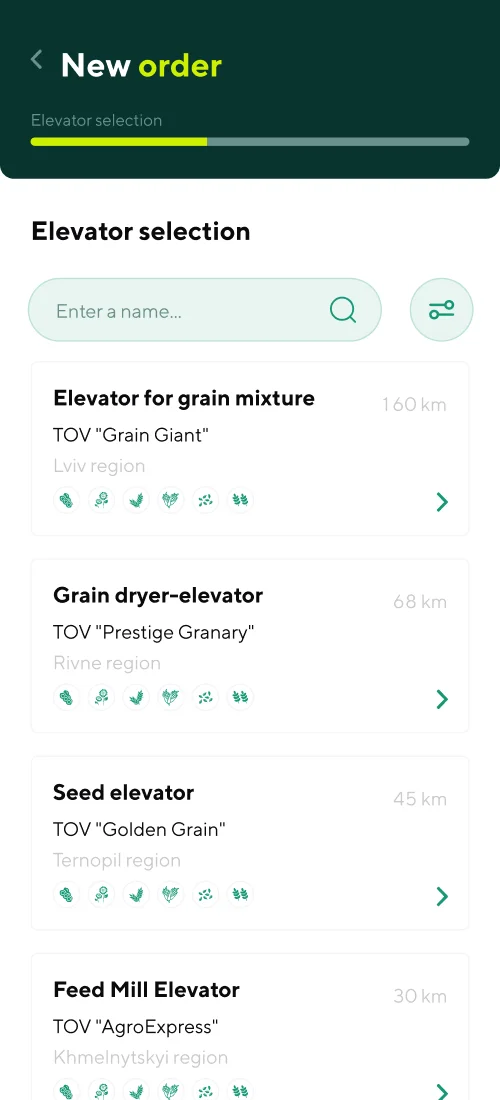
When designing the mobile B2B grain trading and logistics application JetAgro, we replaced chaotic phone brokerage with a streamlined 4-step mobile order workflow:
1-Tap Crop Catalog: high-contrast selection of agricultural commodities for sale or purchase (barley, wheat, sunflower, corn, soy, pea, turnip, linen) engineered for one-handed thumb navigation.
Geospatial Grain Elevator Selection by Distance: an interactive list and map of certified elevators automatically sorted by exact road distance from the farmer's field (160 km, 68 km, 45 km, 30 km).
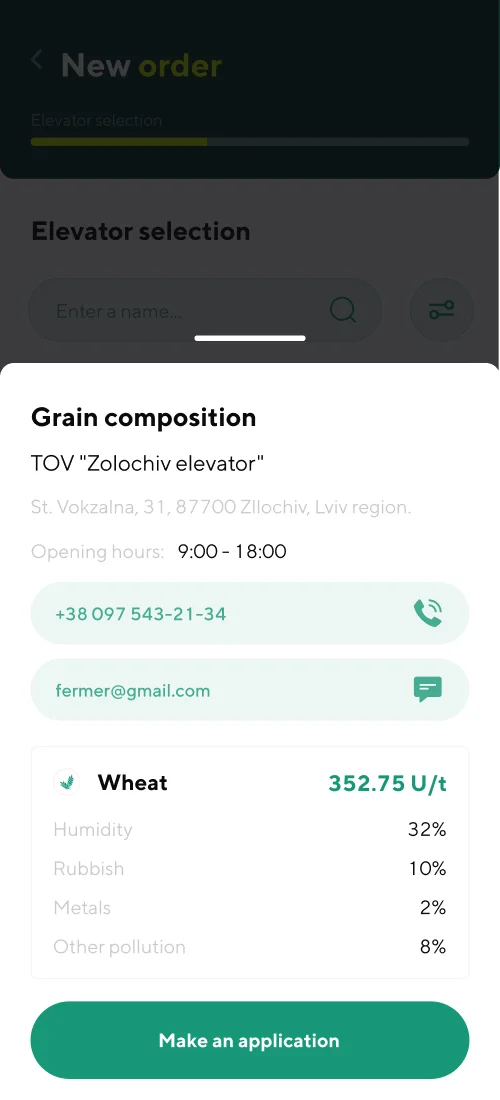
Digital Grain Quality Passport: an embedded laboratory specification card right inside the order screen displaying base price per ton (352.75 U/t), moisture percentage (Humidity 32%), rubbish admixture (10%), metal impurities (2%), and other tolerances.
Tonnage-Based Carrier Selection: instant matching with verified grain haulers displaying truck fleet capacity (15–40 tons) and transparent freight bids in UAH:


3. Calculator Case Study — WashService: 3-Step Turnkey Facility & Equipment Cost Configurator
A second practical example of replacing static 'Request a Price' buttons with an interactive engineering tool is the standalone cost estimation module we designed for WashService.
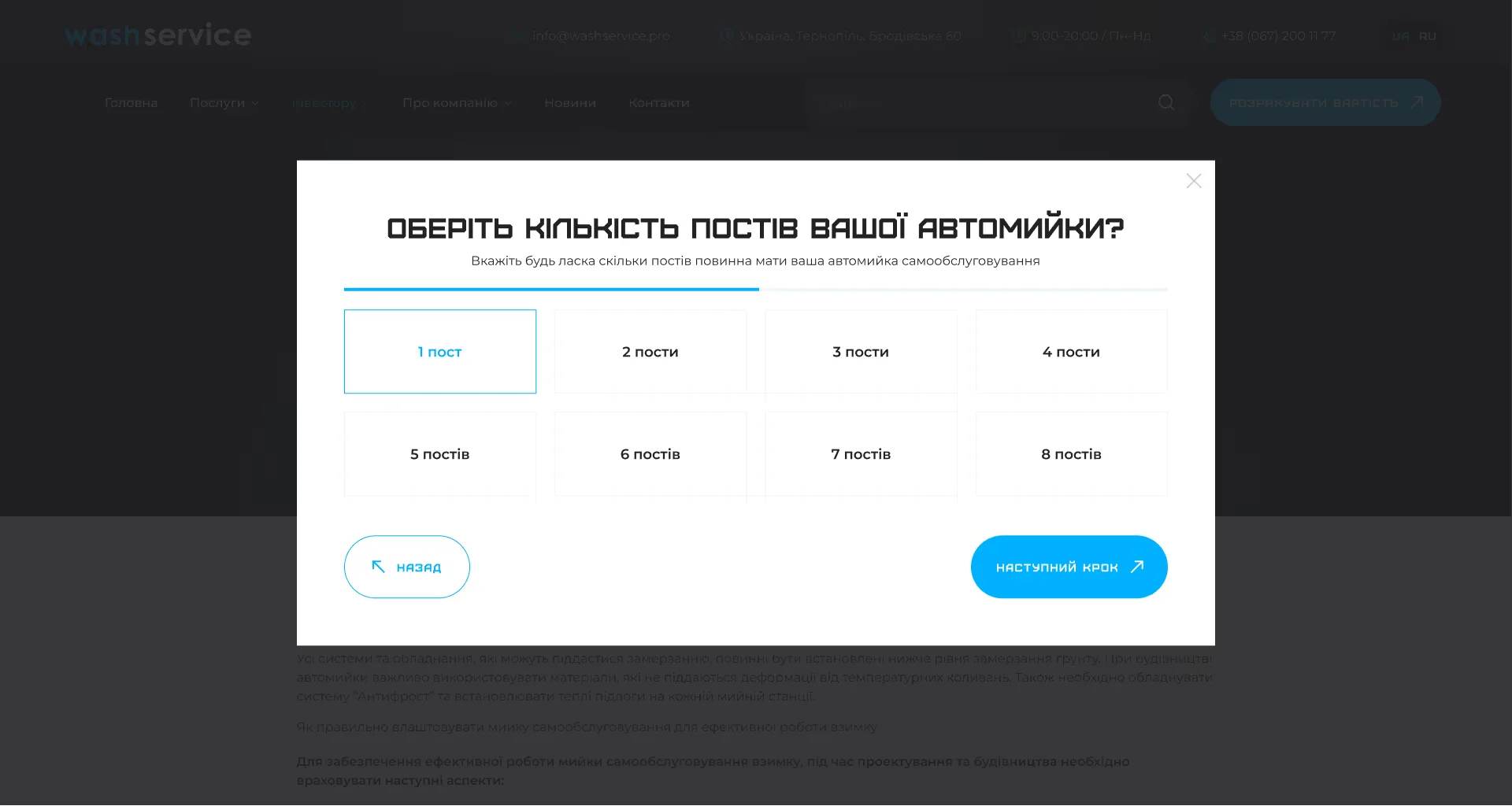
Because the capital budget of a self-service car wash complex depends on dozens of technical variables (number of wash bays, canopy structure, high-pressure pump capacity, water treatment loops), a static price list is useless. We designed a dedicated 3-step interactive cost calculator: prospective B2B investors specify land availability, select the exact number of wash bays (from 1 to 8 bays), and enter their construction city. Instead of an unqualified cold call, the engineering sales team receives a structured project brief with exact site parameters, while the investor receives a tailored turnkey capital estimate:
Integrating the Catalog with ERP/Inventory Systems: Automating 1,000+ Technical SKUs
Even the best industrial UX architecture fails if content managers have to manually update stock levels, tolerances, or wholesale price tiers across 1,500 SKUs. Before examining our automated ERP synchronization protocol, review the unit-economics math comparing a static PDF website against an interactive B2B catalog.
How Replacing a Scanned PDF Price List with a Parametric B2B Catalog & RFQ Configurator Multiplies Wholesale Contracts by 3.7x
- Google Indexing for Technical SKUs & ISO Specs: Near zero (buried PDF tables fail to rank)
- Visitor-to-RFQ Conversion Rate: 0.6% (only 21 inquiries/mo; engineers bounce to rivals)
- Sales Engineering Time Spent Reading Basic Specs: ~110 hrs/mo wasted on repetitive phone questions
- Closed Wholesale Contracts (15% Close Rate): 3.15 deals/mo ($56,700 gross wholesale revenue)
- Monthly Net Margin from Digital Channel: $10,206/mo (underutilized factory capacity)
- Organic Search Capture Across Long-Tail SKUs: 100% indexable product pages & parametric views
- Visitor-to-RFQ Conversion Rate: 2.2% (77 structured engineering inquiries/mo)
- Inbound Lead Quality for Inside Sales: Complete manifest: exact SKUs, batch volume, delivery ZIP
- Closed Wholesale Contracts (15% Close Rate): 11.55 deals/mo ($207,900 gross wholesale revenue)
- Monthly Net Margin from Digital Channel: $37,422/mo (+$27,216 net monthly profit delta)
In industrial manufacturing and agribusiness, just 2–3 additional wholesale contracts per year pay for the entire catalog build. Providing self-service parametric filtering and instant CAD/datasheet downloads captures 8+ extra contracts every month from existing traffic.
1. Bi-Directional ERP / PIM Synchronization (SAP, Odoo, 1C/BAS, Microsoft Dynamics)
To keep 1,000+ technical SKUs accurate without manual data entry, we engineer an automated synchronization pipeline between your website and internal ERP/PIM database via REST API, GraphQL, or scheduled XML/JSON webhooks:
Delta Inventory & Lead-Time Updates: every 15–30 minutes, the catalog syncs warehouse stock and production queue statuses. If a line is scheduled for maintenance, the SKU automatically displays 'Built to Order (14-Day Production Cycle)'.
Dynamic On-the-Fly PDF Datasheet Generation: instead of manually re-exporting 500 PDF files whenever an ISO tolerance changes, the server dynamically renders branded PDF spec sheets directly from live database attributes the moment an engineer clicks 'Download Datasheet.'
Authenticated Dealer Portal & Multi-Currency Pricing: public visitors see baseline indicative pricing or RFQ triggers, while logged-in wholesale distributors view their contract-specific discount tiers and past shipment manifests.
2. 5-Point Engineering Readiness Checklist for Industrial Catalogs
Audit your current B2B website against these five architectural standards before scaling paid search or export outreach:
Granular SKU Indexability: every product series and technical specification table is rendered in semantic HTML with `Product` schema markup rather than trapped inside scanned PDFs.
1-Click Un-Gated CAD & Compliance Assets: `.STEP/.DWG` files, MSDS sheets, and ISO certificates download immediately without forcing engineers through multi-field registration walls.
Sub-Second Faceted Filtering: filtering by load, power, density, or moisture updates results in under 100ms and dynamically prevents zero-result dead ends.
Multi-SKU Batch RFQ Cart: procurement officers can bundle 10+ line items with custom tonnage/meter quantities, destination ZIP codes, and uploaded blueprint attachments.
Mobile Field Performance: catalog pages load in under 1.2 seconds over cellular 4G on 375px screens. Benchmark your site's technical performance against top industry rivals using our interactive Competitor Scanner.
Key Takeaways
Ready to replace static PDF price lists with an automated B2B catalog that captures wholesale contracts?
Up to 75% of B2B buyers and engineers shortlist suppliers independently online—publishing a static PDF price list instead of an searchable web catalog costs manufacturers up to 40% of direct RFQ opportunities.
An industrial Product Detail Page must function as a technical passport: un-gated CAD drawings (.STEP/.DWG), COA/ISO certificates, and variant matrices triple procurement committee approval speed.
Parametric filtering by physical units (load, density, moisture, kW) paired with an interactive batch freight estimator lifts visitor-to-RFQ conversion from 0.6% to 2.2%+.
Automated ERP/PIM synchronization and on-the-fly PDF datasheet generation free up 65% of inside sales engineering time from repetitive phone inquiries.