Custom CRM & Automation
Custom CRM Development Cost in 2026: Budget Breakdown, Timelines & Why SaaS Seat Licenses Bleed $10k+ Annually
Why SaaS CRM seat subscriptions become a hidden tax on growing teams
Once a company scales past 15–35 employees, founders hit a frustrating financial paradox: monthly invoices for commercial cloud CRMs (HubSpot, Salesforce, Zoho, or Pipedrive) climb with every new sales rep, dispatcher, or warehouse operator, yet real-time net margin and unit-economics tracking still happen manually inside Excel spreadsheets. That is when executives ask the pragmatic question: what is the true custom crm development cost, and when does building a proprietary system beat paying $50–$100 per seat forever?
Over 14 years of architecting commercial interfaces and internal operations software, I have audited dozens of companies where 80% of boxed CRM menus sit untouched because they are bloated with generic fields, while mission-critical logic—dynamic margin calculation, multi-tier dealer pricing, or automated cash-flow tracking—requires thousands of dollars in third-party integrator workarounds every quarter. In this guide, we examine a transparent proprietary crm system pricing breakdown, compare 3-year Total Cost of Ownership (TCO) in a custom crm vs hubspot pricing analysis, and show through real portfolio cases how a bespoke system pays for itself in 6–10 months.
The SaaS Subscription Trap: What 20–25 Users in HubSpot or Zoho Actually Cost Over 3 Years
The biggest mistake when evaluating cloud platforms is looking only at entry-level pricing ($15–$25/user). As soon as a growing business requires automated workflows, role-based access control, custom financial reporting, or higher API limits for ERP/POS synchronization, the vendor forces an upgrade to Professional or Enterprise tiers ($65–$110 per seat/month). Understanding the true custom crm for small business cost vs. SaaS requires looking at four hidden cost drivers.
1. The Headcount Scaling Penalty (Per-Seat License Tax)
In standard SaaS models, you pay per login rather than per database volume. If your operation includes 12 sales reps, 4 dispatchers, 3 warehouse staff, 2 finance managers, and 4 regional partners (25 users total), every single person needs an active seat just to update statuses or view their queue. Even if a warehouse operator logs in twice a day to print a shipping label, you pay the full $65–$90 monthly seat fee. Scaling to 35–40 staff pushes annual subscription fees past $25,000–$35,000.
2. Paid Add-Ons, API Overage Fees & Integrator Workarounds
No off-the-shelf CRM understands your exact cost-of-goods formula, raw material waste, or fulfillment stages. Connecting HubSpot or Zoho to Stripe, Twilio, warehouse scanners, or POS terminals requires paid marketplace connectors ($150–$400/mo combined) plus external consultants billing $60–$120/hr. Worse yet, routine cloud platform updates frequently break these webhook bridges, halting order processing.
3. 36-Month Total Cost of Ownership (TCO) Comparison for a 25-Person Team
Below is a side-by-side 3-year financial comparison for an operational team of 25 users. You can explore our architectural deliverables in detail inside the Custom CRM & Financial Analytics hub.
| Cost Factor / Metric | Option 1: Spreadsheets + Messengers | Option 2: Boxed SaaS CRM (Pro Tier, 25 Seats) | Option 3: Bespoke Custom CRM System |
|---|---|---|---|
| Year 1 Seat Licenses | $0 (or basic Google Workspace) | $19,500 ($65 × 25 seats × 12 mos) | $0 (zero per-seat license fees) |
| 3-Year Seat Licenses | $0 | $58,500 (recurring OpEx outflow) | $0 (unlimited employee accounts) |
| Initial Setup / Engineering | $0 (built ad-hoc) | $3,500–$6,000 (consultant onboarding) | $8,500–$14,000 (one-time CapEx investment) |
| Paid Plugins & API Bridges | Manual copy-pasting | $9,000 over 3 years ($250/mo add-ons) | Built natively into your backend ($0/mo) |
| Staff Time Lost to Admin Routine | ~32% of work hours ($18,000+/yr waste) | ~15% of hours (clicking around bloat + Excel) | < 3% of hours (tailored 3-click workflows) |
| Data & Code Ownership | High risk of 2-click spreadsheet theft | Hosted on vendor cloud, vendor lock-in | 100% proprietary IP on your own server |
| Total 3-Year Cost (TCO) | $54,000+ in wasted payroll & lost leads | $71,000–$73,500 in non-recoverable rent | $9,500–$15,200 (including $35/mo cloud VPS) |
Inside the Custom CRM Budget: Database Architecture, Financial Module & Role Permissions
When founders evaluate a proprietary crm system pricing breakdown, they are investing in a digitized operational engine built around their exact business rules. Here is how engineering hours and budget allocate across four core modules, illustrated with systems we have built.
1. High-Density UX Architecture & Operator Ergonomics (20% of Budget — $1,500–$3,000)
Unlike marketing websites designed for emotion, an internal CRM is judged by task completion speed in seconds and zero operator input errors. During discovery, we audit your existing spreadsheets, eliminate redundant columns, and build interactive Figma prototypes. Every screen is engineered for keyboard shortcuts, 1-click status filtering, pinned summary columns, and sub-second search by phone number or SKU.
2. Core Operations Engine & Automated Pricing Rules (40% of Budget — $3,000–$6,000)
The primary reason businesses outgrow boxed CRMs is their inability to handle domain-specific logic: dynamic rate matrices, time-slot resource allocation, batch inventory, or multi-tier dealer discounts.
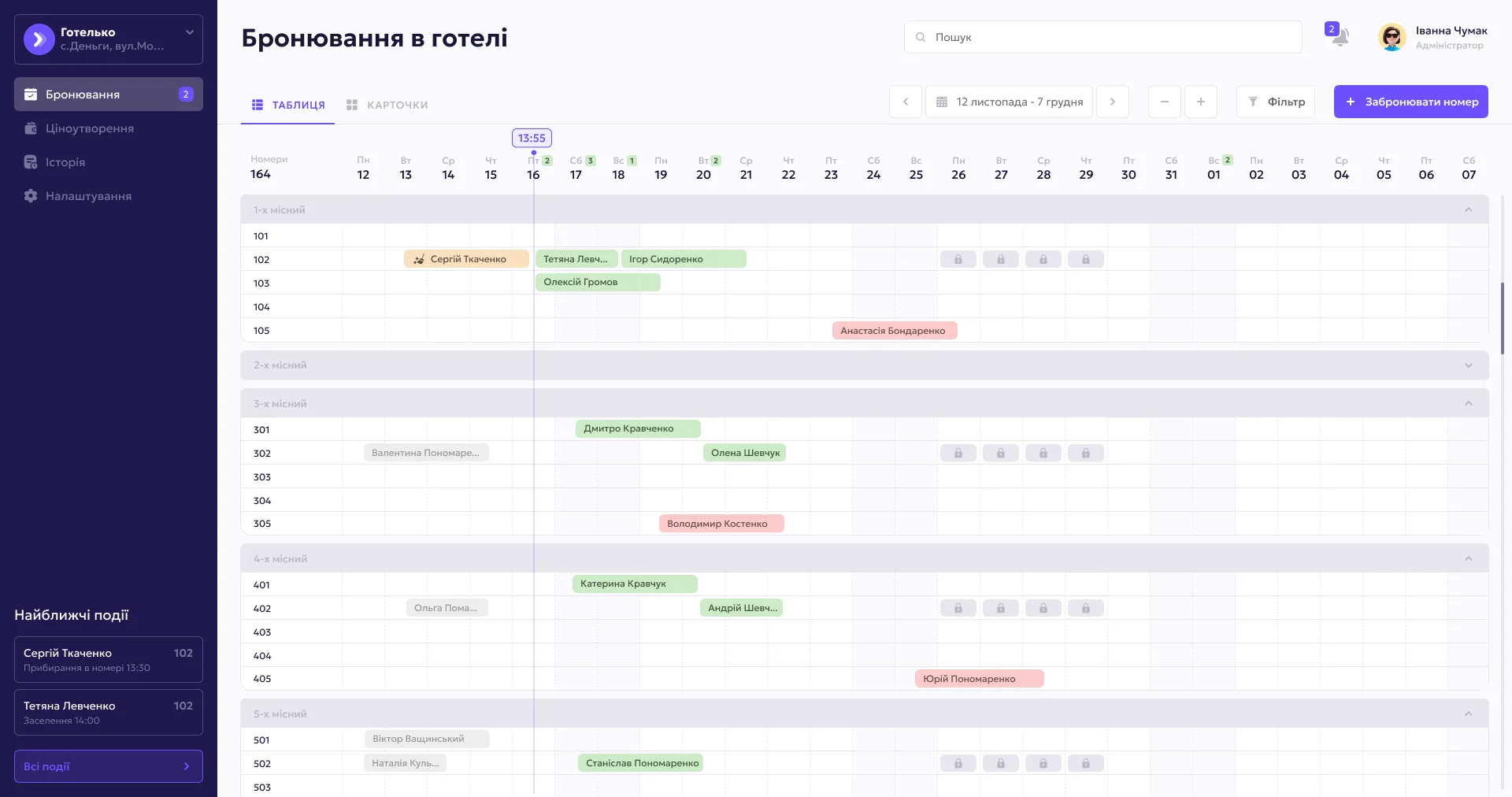
A clear example is SIESTA, a hotel management MVP system (PMS/CRM) we designed. Receptionists needed a dual-view booking workspace (an interactive timeline calendar grid and room-category occupancy cards), while management needed automated yield control. On the top screen of the "Pricing" (`Ціноутворення`) module, managers operate a calendar rate matrix across room categories paired with a slide-over bulk pricing configurator for base rates and percentage markups, while the "Conditions" (`Умови`) tab manages automated rules by occupancy, season, and channel with built-in duplicate promotion alerts:

3. Executive Financial Dashboard & Granular RBAC (25% of Budget — $2,000–$3,500)
Founders should not spend weekends reconciling spreadsheets to discover their net profit. In a custom CRM, we build an executive command center that calculates real-time P&L, order-level gross margin, Cash Flow, accounts receivable aging, and sales rep unit economics.
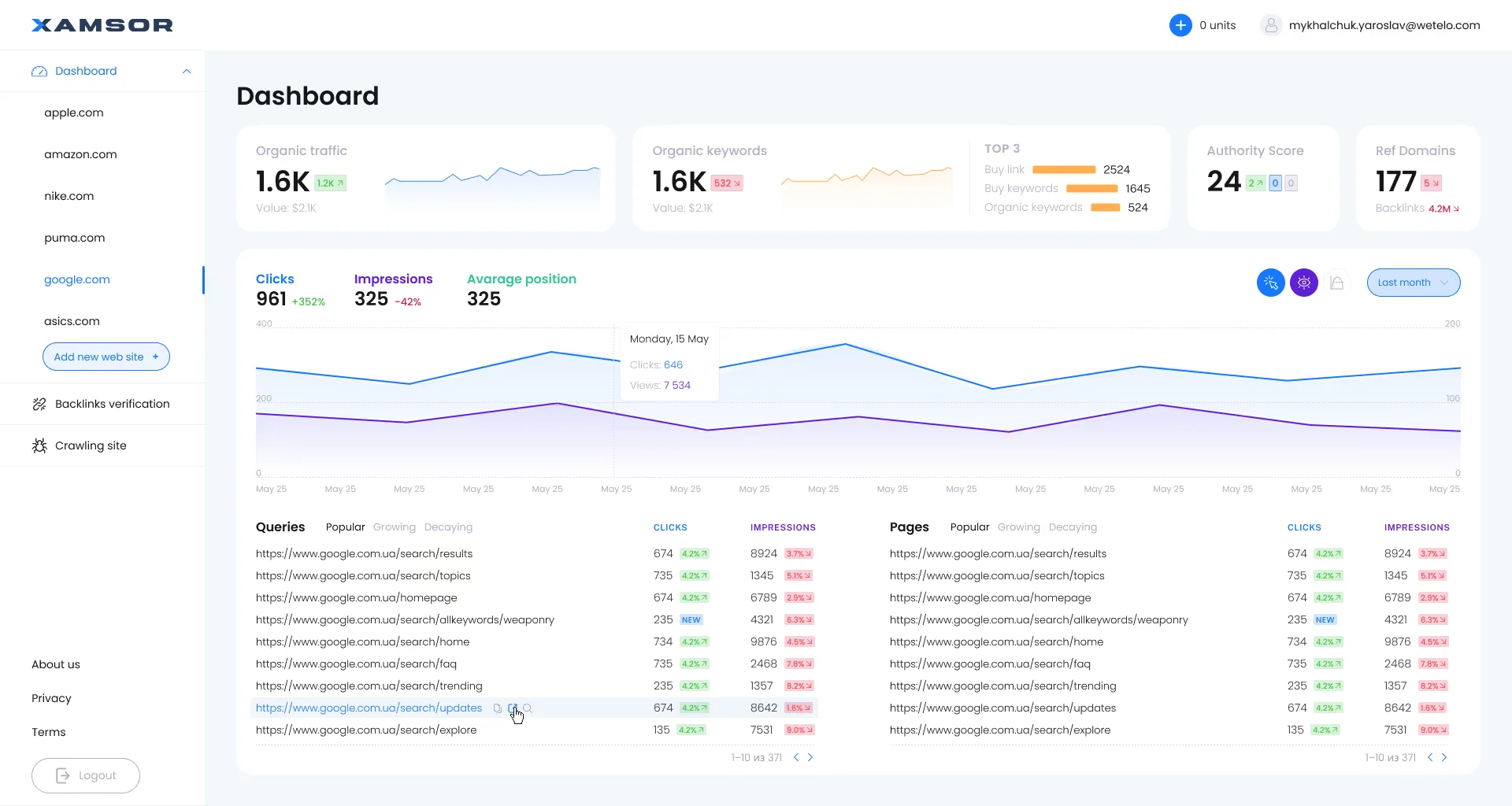
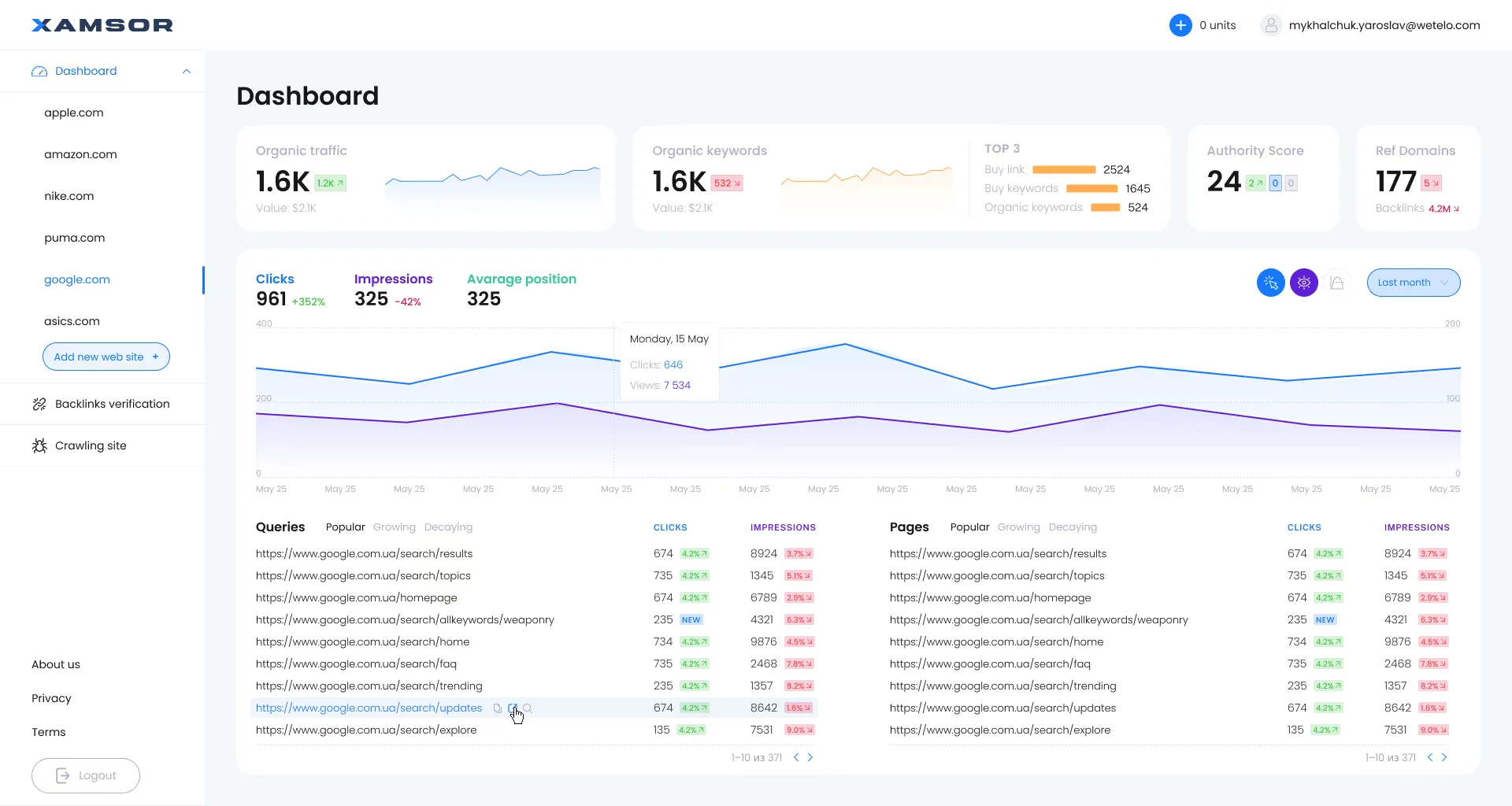
We applied this exact high-density data engineering in the analytics platform Xamsor. Instead of scattering metrics across dozens of nested menus, we consolidated all critical KPIs onto a single viewport featuring a top-level metric card hierarchy, an interactive multi-series timeline chart, and dual synchronized data tables with instant status segmentation (Popular, Growing, Decaying):
4. Direct API Integrations, Zero-Trust Security & Audit Logs (15% of Budget — $1,200–$2,500)
The final budget allocation covers two-way API synchronization with your existing stack (accounting, POS terminals, Stripe/bank feeds, shipping carriers, VoIP telephony, Telegram alerts) and database security. We implement phone-number masking, block bulk CSV exports for junior reps, and maintain an immutable Activity Log recording every price edit, status change, or cancellation down to the second and user profile.
Timeline Comparison: Launching a Focused MVP in 4–6 Weeks vs. 14-Month Enterprise Rollouts
A common fear among executives is that custom software takes a year to build. In reality, trying to bend a rigid enterprise CRM around a live business is what drags on for 12+ months, whereas a custom system launches via a 4–6 week iterative MVP (Minimum Viable Product).
Why Boxed CRM Implementations Stall for 6–14 Months
Off-the-shelf enterprise platforms ship with 400+ database tables and thousands of configuration toggles. Consultants spend months writing 80-page specs and building fragile middleware webhooks just to calculate your custom margin. When the system is finally handed to the sales floor six months later, reps resist using it because logging a standard order now takes 18 clicks instead of 3.
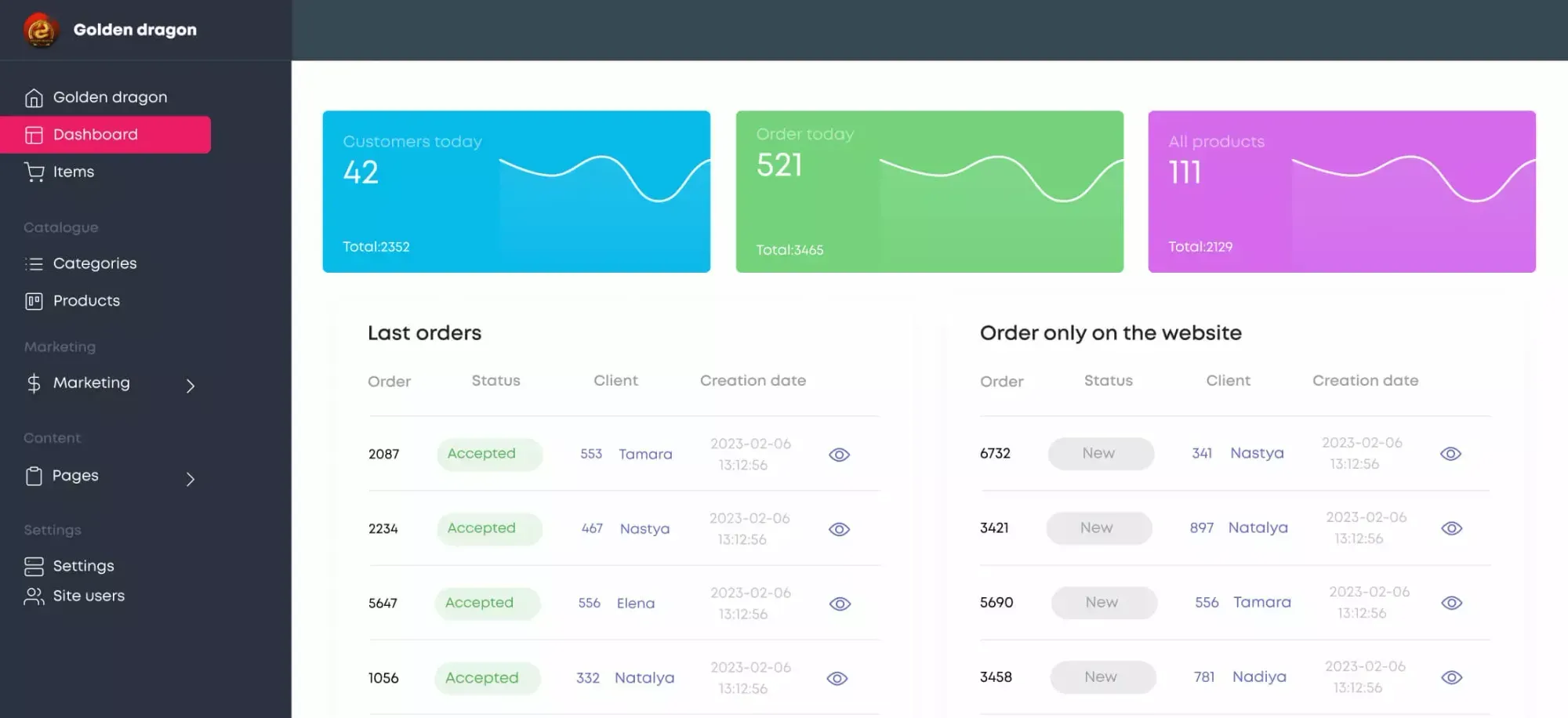
How a 6-Week Custom CRM/CMS Sprint Works: The Golden Dragon Case Study
When engineering a custom system, we prioritize the core 20% of operational workflows that eliminate 80% of daily manual friction, shipping a production-ready MVP in 4–6 weeks.
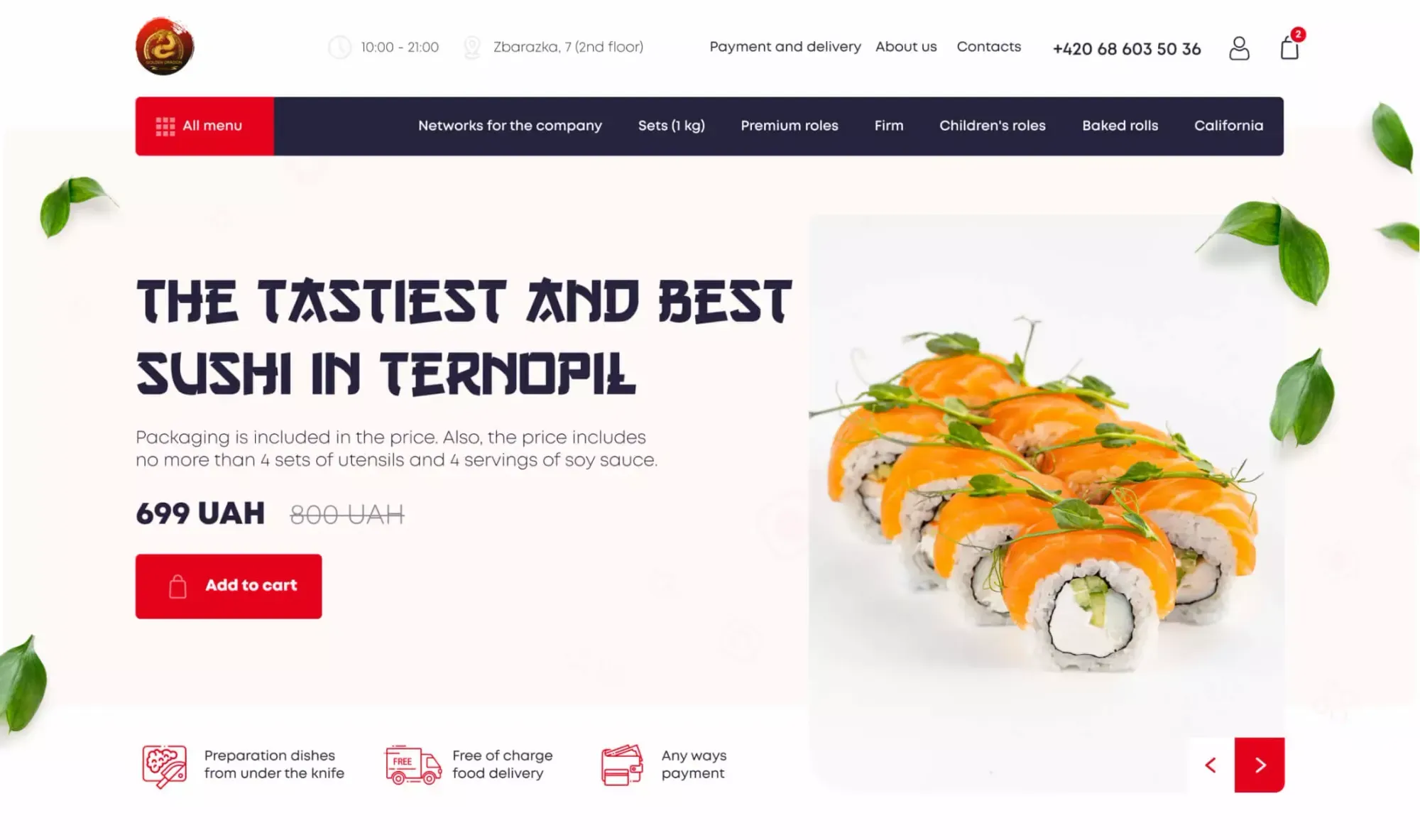
A strong example is the custom administration panel and order management system we built for sushi delivery brand Golden Dragon. Instead of forcing the team into a bloated boxed back-office, we designed and developed a bespoke admin dashboard synchronized in real time with their Poster POS system. Management tracks live daily customers, order volume, and active SKUs on the main screen, while operators toggle menu categories in one click, manage countdown promos, and configure bundle discounts:
| Implementation Phase | Heavy Boxed CRM / ERP | Bespoke Custom CRM (MVP Sprint) |
|---|---|---|
| Weeks 1–2 | License negotiations, 80-page bureaucratic spec | Spreadsheet audit & interactive Figma UX prototype |
| Weeks 3–4 | Basic pipeline setup, fighting third-party plugins | Database schema, role permissions & core order engine |
| Weeks 5–6 | Hitting API rate limits, paying for custom workarounds | Clean Excel data import, POS/bank sync & live launch |
| Staff Onboarding Time | 2–4 weeks (complex manuals, staff pushback) | 2 hours (only relevant actions on screen) |
When You Definitely Do NOT Need a Custom CRM—And When It Pays Back in Under a Year
As an engineer, I talk founders out of custom development whenever a $50/mo tool is enough. Let's look at the exact financial threshold using a build vs buy crm calculator model.
Boxed SaaS CRM vs. Proprietary Custom System: 36-Month Math for a 25-User Team
- 25 Seat Subscriptions: $1,625/mo ($58,500 over 3 years)
- Paid Marketplace Add-Ons: $250/mo ($9,000 over 3 years)
- Initial Integrator Setup: $3,600 (webhook workarounds)
- Manual Margin Tracking: 15% staff time still spent in Excel
- IP & Database Ownership: 0% (rented on vendor cloud)
- Per-User License Fees: $0/mo (scale to 100+ staff for free)
- Turnkey Engineering & Launch: $10,500 (one-time CapEx)
- Dedicated Cloud VPS Hosting: $35/mo ($1,260 over 3 years)
- Real-Time P&L & Cash Flow: Built-in natively (0 hours in Excel)
- IP & Database Ownership: 100% owned code & isolated database
Even before counting reclaimed staff hours and eliminated cash-flow blind spots, a $10,500 one-time custom CRM build reaches 100% payback in 5.6 months purely by eliminating 25 monthly seat licenses and marketplace add-on fees.
When an Off-the-Shelf $50/mo Cloud CRM Is Enough
Your team has fewer than 5 sales reps, and your pipeline follows a linear B2B sequence: "Lead In → Discovery Call → Proposal Sent → Closed Won".
You have no custom manufacturing, multi-warehouse inventory, dynamic dealer price tiers, or complex unit-cost formulas.
You are testing an early-stage startup offer and your internal operational processes change every week.
When a Proprietary Custom CRM Becomes a Decisive Financial Advantage
12–15+ active staff members across sales, dispatch, fulfillment, and finance where per-seat SaaS billing exceeds $1,000–$1,500/mo.
Non-standard pricing & margin logic: wholesale distribution, construction, agricultural trading, NEMT medical transport, hospitality, or multi-branch e-commerce.
Strict database security requirements: you cannot risk a departing sales rep exporting your client list in 2 clicks, nor can you afford vendor lock-in.
Step-by-Step Checklist to Calculate Custom CRM Payback for Your Team
Use this 3-step executive checklist to calculate your exact transition budget and payback timeline.
Step 1. Project Your 36-Month SaaS License Outflow
Take your current headcount and add planned hires over the next 24 months. Multiply that number by Professional/Enterprise seat pricing ($65–$90/mo) and add monthly fees for telephony, messenger widgets, and API bridges. If your 3-year total exceeds $15,000, you are overpaying for rented software.
Step 2. Quantify Payroll Burn on Spreadsheet Copy-Pasting
Measure how many minutes per day reps and finance staff spend copying figures between your CRM and Google Sheets to calculate commissions, stock balances, or net margins. Across a 20-person team, just 90 minutes of daily spreadsheet routine burns over $3,500/month in payroll ($42,000/yr). Run your exact numbers in 2 minutes using our interactive Excel-to-CRM Waste & Payback Calculator.
Step 3. Define Your Phase-1 MVP Core
Do not pack once-a-year reports into your initial build. Scope Phase 1 around four high-impact pillars:
Unified client and order database with sub-second search and masked phone numbers.
Automated cost-of-goods, discount, and net-margin calculation tailored to your business rules.
Direct two-way API sync with your POS, warehouse, banking, and shipping providers.
Real-time executive dashboard displaying net profit, Cash Flow, and accounts receivable.
Key Takeaways
Ready to stop paying perpetual per-seat rent for cloud CRM software?
For a 25-person team, boxed SaaS CRMs drain over $71,000 across 3 years in per-seat licenses and paid integration add-ons.
A bespoke custom CRM ($8,500–$14,000) is a one-time capital investment with $0/mo per-user fees—allowing you to scale headcount freely.
An iterative MVP sprint delivers a production-ready custom CRM in 4–6 weeks by focusing strictly on your core revenue workflows.
Full financial break-even occurs in 5.6–9 months, saving the business $18,000 to $30,000+ every year thereafter.