E-Commerce & Conversion
Custom E-Commerce UI vs Shopify/WooCommerce Templates: Why an $80 Theme Bleeds $18k/Year in App Taxes & Ad Waste
Why an $80 theme turns into a $1,500/month tax on paid ad spend and third-party app subscriptions
When launching an online store, buying a pre-made template on ThemeForest or the Shopify Theme Store looks like a smart financial shortcut: you pay $59–$380 for a license, upload product photos, and go live in a week. However, once monthly GMV crosses $25,000–$50,000 and paid acquisition budgets in Google Shopping and Meta Ads scale past $5,000/month, founders hit a brutal ceiling. That is when executives face the strategic question of custom ecommerce design vs shopify theme architecture—and whether holding onto a generic template is silently draining their net profit.
Over 14 years of architecting high-converting e-commerce platforms across North America, the EU, and Ukraine, I have audited dozens of stores trapped in template debt. In 9 out of 10 cases, a 'cheap' theme accumulates 20–35 third-party plugins within its first year ($300–$850/month in Shopify App Store fees or endless developer retainers fixing WooCommerce/OpenCart plugin collisions), mobile Largest Contentful Paint (LCP) degrades to 4.8 seconds, and conversion rates stagnate at 0.8%–1.1%. In this guide, we break down the true bespoke ecommerce store development cost, analyze 3-year Total Cost of Ownership (TCO), explain why templates hurt ecommerce conversion, and demonstrate across 4 real portfolio case studies how a custom architecture pays for itself in under 90 days.
The Template Savings Illusion: Where Thousands of Dollars Disappear in Endless Workarounds
The core trap of off-the-shelf themes lies in confusing initial license cost (CapEx) with long-term operational and scaling cost (OpEx). When a merchant buys a multipurpose theme for Shopify (Impulse, Prestige), WooCommerce (Flatsome, WoodMart), or OpenCart (Journal), they inherit a bloated codebase built to serve 50 unrelated industries simultaneously—from auto parts to sushi delivery and fine jewelry.
1. The App Ecosystem Tax & Plugin Collision Spiral
Out-of-the-box templates never cover the commercial mechanics required to scale unit economics. As soon as your marketing team needs dynamic product bundles, tiered loyalty cashback, B2B wholesale pricing, instant faceted search, or a streamlined 1-page checkout with Apple Pay—the plugin spiral begins.
In the Shopify Ecosystem: Every merchandising feature (in-cart upsells, advanced collection filters, custom checkout fields, reviews, multi-currency) requires a recurring monthly subscription ranging from $29 to $199/mo. Mid-market stores routinely spend $5,000 to $12,000+ annually on third-party apps alone, before factoring in platform transaction fees (0.5%–2.0% outside Shopify Payments). Upgrading to Shopify Plus locks in a base platform cost of $2,300–$2,500/month ($27,600–$30,000/year).
In the WooCommerce & OpenCart Ecosystem: While plugins are often sold as one-off licenses ($40–$150), they are coded by disconnected vendors without unified performance standards. By the time a store runs 25 active plugins, database queries multiply, AJAX cart updates clash with discount rules, and founders bleed $600–$1,500 every month paying developers to patch broken updates.
2. 36-Month Total Cost of Ownership (TCO) Matrix: Generic Theme vs. Custom Architecture
Below is a 3-year financial comparison for a scaling e-commerce brand (2,500 SKUs, $7,500/mo paid ad spend). Explore our complete architectural standards inside the High-Yield E-Commerce Design hub.
| Cost Driver / Performance Metric | Option 1: WooCommerce / OpenCart Theme ($80) + 25 Plugins | Option 2: Shopify Theme ($350) + Paid App Stack | Option 3: Bespoke UX/UI & Custom Frontend Stack |
|---|---|---|---|
| Initial Build Investment (CapEx) | $1,500–$3,000 (theme setup & plugin installation) | $2,000–$4,000 (theme configuration & app wiring) | $6,500–$14,000 (full custom UX/UI + clean codebase) |
| 3-Year Platform & App Subscriptions | $2,200–$4,000 (annual plugin renewals & hosting) | $18,000–$32,400 ($500–$900/mo in plan + 15 paid apps) | $0 in third-party UI app fees (native core features) |
| 3-Year Developer Bug-Fixing Retainers | $16,200–$25,000 ($450–$700/mo patching plugin conflicts) | $8,500–$14,000 (working around Liquid & checkout limits) | Planned feature evolution without core rewrites |
| Mobile 4G Core Web Vitals (LCP / INP) | LCP 4.2–5.8s / INP 480ms (Failing CrUX) | LCP 3.4–4.6s / INP 390ms (choked by synchronous app JS) | LCP 0.9–1.4s / INP < 90ms (95+ PageSpeed Green Zone) |
| Average Mobile Conversion Rate (CR) | 0.85%–1.15% (high drop-off on slow filters & checkout) | 1.20%–1.55% (generic multi-step checkout friction) | 2.40%–3.60%+ (tailored PDP, Thumb Zone, 1-page checkout) |
| 3-Year Total Cost of Ownership (TCO) | $19,900–$32,000 (+ massive wasted ad spend) | $28,500–$50,400 in recurring OpEx outflow | $7,500–$16,200 (100% proprietary code & asset ownership) |
Template Technical Debt: Why Standard Themes Fail Google Core Web Vitals (LCP & INP)
When founders ask why templates hurt ecommerce conversion on cold paid traffic, 70% of the answer lies in browser rendering physics rather than aesthetics. Google evaluates and ranks storefronts using real-user field data (Chrome UX Report) across two decisive metrics: Largest Contentful Paint (LCP ≤ 2.5s) and Interaction to Next Paint (INP ≤ 200ms).
1. Anatomy of Latency: 4.2 MB of DOM Bloat & Main Thread Blocking
Why does a template-based store freeze for 3–4 seconds when a mobile shopper taps 'Add to Cart' or opens a size filter drawer?
Monolithic CSS/JS Bundles: Multipurpose themes ship with 15 header variations, multiple slider libraries (Swiper, Slick, OwlCarousel), legacy jQuery dependencies, and styles for hundreds of unused widgets. A shopper's smartphone on a 4G connection must download and parse 3.5–5.0 MB of dead code before rendering the hero product image.
Third-Party App Script Injection: In Shopify and WooCommerce, every installed app (review carousels, spin-to-win popups, urgency timers, chat widgets, cross-sell sliders) injects synchronous JavaScript into the document `<head>`. When a user taps a product variant, the mobile CPU's main thread is choked by competing event listeners. INP spikes above 450–600ms, making the interface feel unresponsive and driving immediate bounce inside Instagram or TikTok in-app browsers.
2. Mobile-First 375px Ergonomics & PayPal/Card Checkout: Luxury Life Case Study
When replacing woocommerce with custom stack or building a clean bespoke theme, we engineer on a Zero-Bloat Architecture principle: only the exact assets needed for the active view are loaded, and the 375px mobile viewport is architected specifically for single-handed Thumb Zone operation.
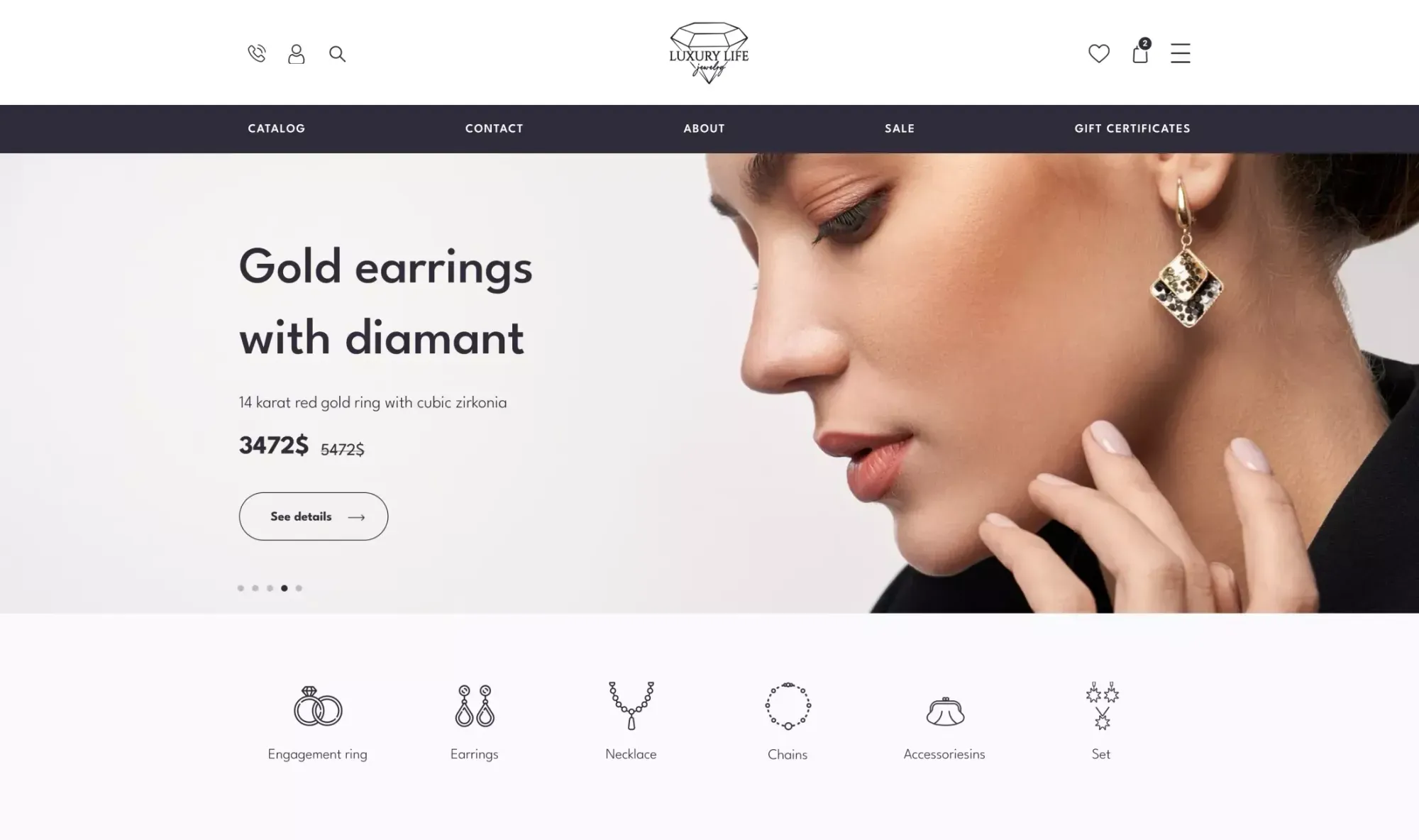
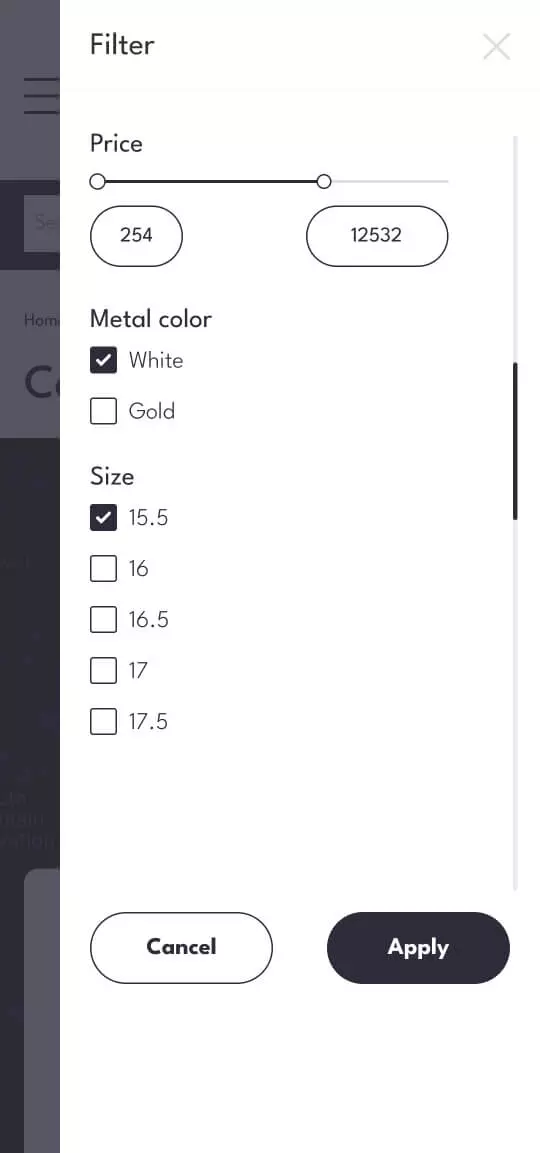
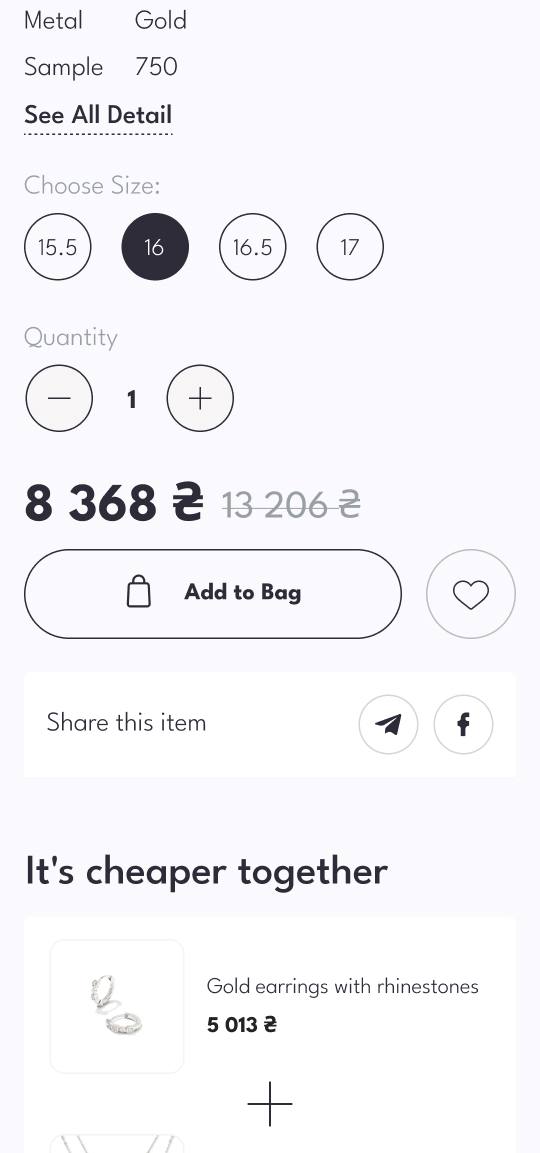
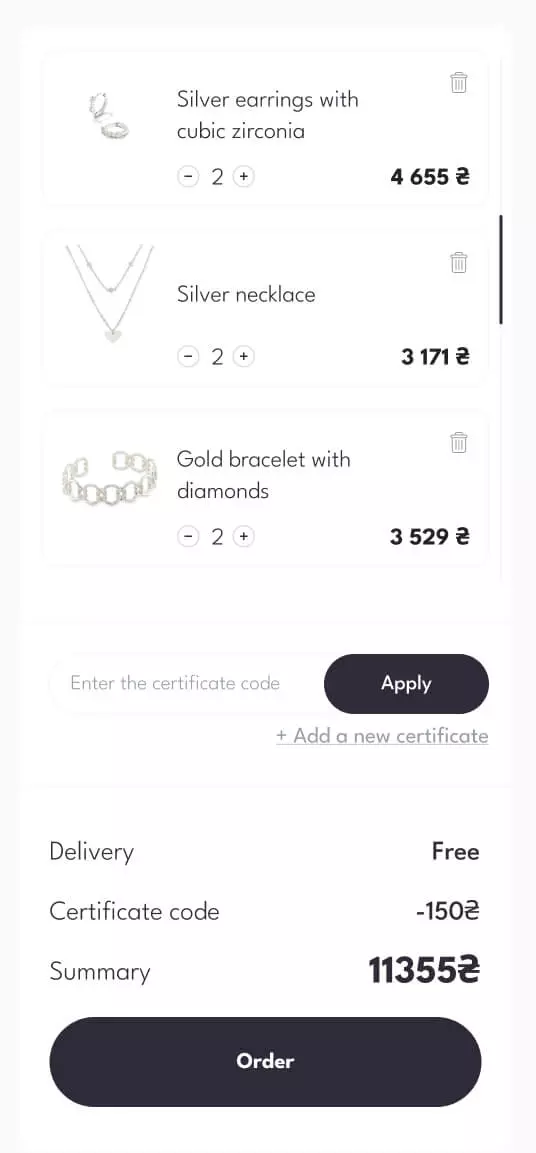
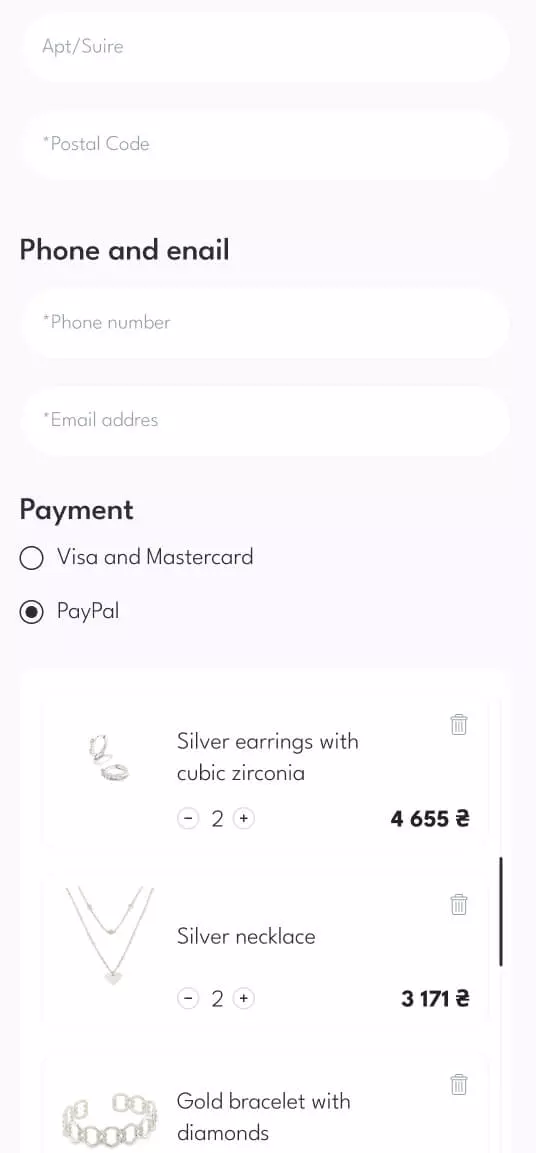
A clear example is Luxury Life, an online jewelry store we designed and developed. Over 84% of social ad traffic for gold and silver jewelry arrives via smartphones. Instead of a sluggish multipurpose template, we engineered custom UX wireframes and adapted 24 core mobile screens: metal color (`White / Gold`), ring size (`15.5–17.5`), and price filters slide out smoothly in a dedicated `Filter` drawer, the mobile product card features one-tap size selection, an `Add to Bag` button, and an `It's cheaper together` bundle block, the cart applies gift certificates (`Certificate code -150₴`) with free shipping, and the checkout integrates PayPal and credit card (`Visa and Mastercard`) payment options:
Brand Equity & Gross Margin: Why Shoppers Refuse to Pay Premium Prices on Generic Sites
The second hidden cost of templates is margin compression. When you sell high-margin or high-consideration products—artisan goods, clinical skincare, custom blades, or designer jewelry with $150–$800+ price tags—buyers judge brand legitimacy within 2.5 seconds based on visual and structural cues.
1. Baymard Institute Benchmarks: How Generic Layouts Trigger 19% Checkout Abandonment
According to Baymard Institute checkout usability research, 19% of online shoppers abandon checkout specifically because they 'did not trust the site with their credit card information', contributing to an industry-wide cart abandonment average of 70.19%.
Why does this trust gap happen? Standard Shopify Dawn or OpenCart templates are used by hundreds of thousands of overnight dropshipping stores. Savvy consumers subconsciously recognize generic card grids, stock '100% Secure' badges, and layout shifts (CLS). When your storefront looks like it was assembled in an afternoon for $60, shoppers doubt product authenticity—forcing you to slash prices by 25%–30% just to close the sale.
2. High-Ticket Artisan Dark UI & Technical Proof: Teren Blade Case Study
Bespoke e-commerce design eliminates price resistance by aligning visual craftsmanship and Product Detail Page (PDP) architecture with the physical quality of the product.
Consider Teren Blade, an e-commerce store we architected for a Ukrainian brand of handcrafted custom knives. Selling `CPM-Magnacut`, `M390`, and `D2` steel blades to collectors and outdoorsmen requires deep technical authority. After UX wireframing and testing multiple visual directions (from tactical military to culinary minimalism), we crafted an Artisan Dark UI that highlights blade bevels and handle textures.
On the Teren Blade product page, we replaced generic tab descriptions with above-the-fold engineering artifacts: a structured specification table (steel grade `CPM-Magnacut`, exact `59-60HRC` Rockwell hardness, blade geometry, and handle materials), a live stock counter (`В наявності — Осталося 7шт.`), primary `ДОБАВИТИ В КОРЗИНУ` (Add to Cart) and `КАСТОМІЗАЦІЯ` (Customization) actions, 4 service guarantee cards (`ДОСТАВКА`, `ОПЛАТА`, `10 РОКІВ` warranty, `14 ДНІВ` returns), and an embedded field video review:

Merchandising Agility: Launching Custom Bundles & Interactive Builders in 1 Day
In modern e-commerce, first-order profitability depends on maximizing Average Order Value (AOV) and Lifetime Value (LTV) to offset rising CPCs. Generic templates lock merchants into rigid 'single item → cart' flows, turning custom merchandising mechanics into multi-week engineering headaches.
1. Why Rigid Template Grids Leave 25%+ of Cross-Sell Revenue on the Table
In a standard theme, products exist as isolated static SKUs. Whenever a growth team wants to launch an interactive bundle builder ('Build a 4-item kit & save 15%'), calculate live weight and price adjustments for custom ingredients, or unify three distinct brand concepts under one shared cart—third-party plugins either break mobile layouts or force jarring full-page reloads on every click.
2. Multi-Concept Header Switcher & Slide-Out Ingredient Builder: CoolBaba Case Study
In custom frontend architecture, we build merchandising and cross-sell mechanics using Optimistic UI state management, updating cart totals and product modifiers in under 50 milliseconds without page reloads.
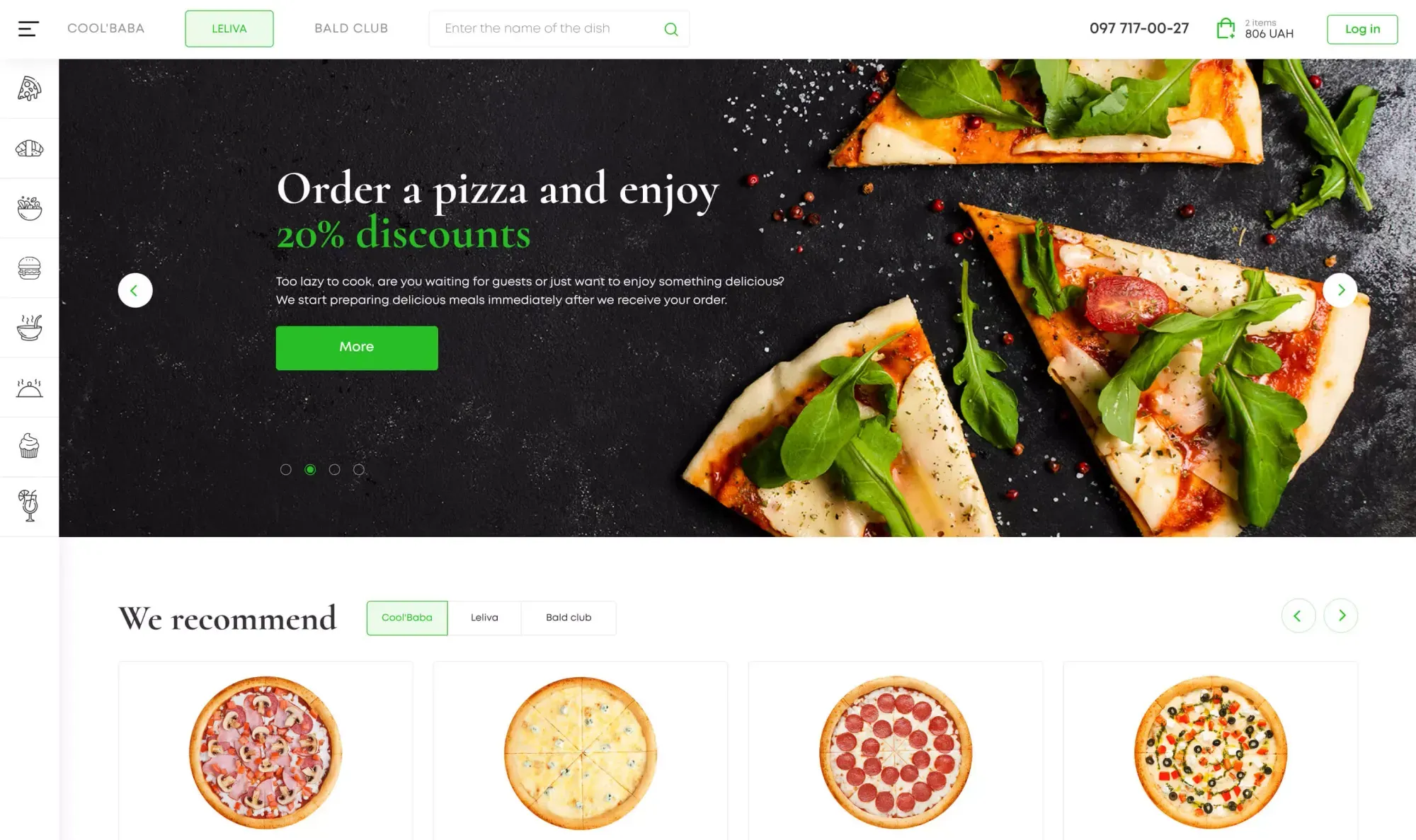
We implemented this exact architecture for CoolBaba, a restaurant chain and food delivery platform uniting three distinct dining concepts (`COOL'BABA`, `LELIVA`, and `BALD CLUB`) inside a single store. Instead of forcing customers onto separate domains, we designed instant brand-switching tabs in the header, paired with a slide-out custom ingredient builder drawer (`Add ingredient`). Without leaving the dish page (`Caribbean, 570 g`), shoppers toggle bacon, chicken, pepperoni, salami, mozzarella, parmesan, shrimp, or signature sauces inside the side drawer with portion counters (`- 1 +`) and live weight (`100 g`) and price recalculation:

Platform Evolution: When to Graduate from Boxed Themes to a Custom High-Speed Stack
Determining your headless commerce custom frontend roi or bespoke redesign payback is a matter of unit-economics math. Compare how a template store and a custom-engineered storefront perform on the exact same $7,500/month media buying budget.
Bloated Template Store vs. Bespoke High-Speed E-Commerce Architecture ($7,500/mo Ad Spend in Google Shopping & Meta Ads)
- Mobile Conversion Rate (4.4s LCP): 1.10% (165 completed orders from 15,000 clicks)
- Customer Acquisition Cost (CAC): $45.45 (exceeds the $35.70 gross margin per order)
- Monthly Revenue (GMV @ $85 AOV): $14,025/mo (42% gross margin = $5,890)
- Monthly App Fees & Bug Retainers: $650/mo ($7,800/yr burned on maintenance)
- Net Monthly Cash Flow: −$2,260 net loss (impossible to scale ad spend)
- Mobile Conversion Rate (1.1s LCP + Thumb Zone): 2.45% (367 completed orders on identical traffic)
- Average Order Value (AOV) Uplift: From $85 to $106 (+24.7% via slide-out bundle drawer)
- Monthly GMV & Gross Profit (42%): $38,902 GMV → $16,338 monthly gross profit
- Monthly Third-Party UI Plugin Fees: $0/mo (all merchandising logic built natively)
- Net Monthly Cash Flow Uplift: +$11,048/mo vs. template store (+$132,576/year)
Lifting conversion from 1.1% to 2.45% while increasing AOV by 24.7% turns an unprofitable ad account (−$2,260/mo) into a scalable profit engine (+$8,788/mo net), paying back a $9,500 custom redesign in 25.8 days.
1. 5 Triggers Indicating Your Store Has Outgrown Templates
You do not need custom development if you are testing a brand-new product line with 20 SKUs and $300/mo in ad spend. However, transitioning to a bespoke e-commerce architecture becomes mandatory when 2 or more of these conditions apply:
Paid Ad Spend Exceeds $3,000–$5,000/month: Losing even 0.8% in conversion rate to slow template scripts burns more capital every quarter than the one-time cost of a custom build.
Mobile LCP Exceeds 3.0 Seconds in Google Search Console, and developers tell you speed cannot be fixed without disabling merchandising apps.
Hybrid Business Models (D2C Retail + B2B Wholesale or E-Commerce + Academy): When your platform must serve both retail shoppers and verified wholesale professionals.
Complex Product Configuration: Selling items that require multi-attribute technical filtering, custom sizing, or bundle builders.
Expansion into North American & EU Markets: Where buyers immediately abandon generic dropshipping-style storefronts.
You can audit your current store across 20 conversion and speed checkpoints in 2 minutes using our interactive E-Commerce Ad Spend Readiness Scanner.
2. Hybrid D2C Retail & Academy Storefront: Elixir Case Study
A textbook example of a business model that breaks standard Shopify or OpenCart templates is combining retail e-commerce, gated B2B wholesale distribution, and an accredited training academy.
We architected this exact 2-in-1 ecosystem for Elixir, an official distributor of global professional cosmetics brands. On the homepage, we unified the direct-to-consumer bestseller showcase (`Face creams` hero and visual category tiles for `Hair products / Peelings / Filers / For hands`) with dedicated practitioner navigation (`For masters`, `Loyalty system`) and a direct cosmetologist acquisition banner (`Are you a beautician? Register`):

3. 3-Step B2B Practitioner Verification & Diploma Upload Flow in Elixir
To gate wholesale pricing on Elixir without manual messenger checks, we designed a dedicated 3-step practitioner verification and onboarding flow (`Registration of cosmetologists`). The multi-step interface captures contact credentials (`Contact details`), verifies clinic or salon affiliation (`Workplace`), and provides secure certificate and diploma uploads (`Cosmetician.pdf` / `Download certificates and diplomas`) to automatically unlock wholesale B2B pricing and Elixir Academy* training courses:

Key Takeaways
Ready to replace plugin bloat with a high-converting custom storefront?
Off-the-shelf themes ($60–$350) are only viable for initial MVP validation; at scale, they drain $19,000–$45,000+ over 3 years in recurring app subscriptions and developer bug-fixing retainers.
Synchronous JavaScript injected by 15–25 third-party plugins tanks Google Core Web Vitals (LCP > 4s, INP > 400ms), cutting paid social and shopping conversion rates in half.
Per Baymard Institute research, 19% of shoppers abandon checkout due to visual mistrust—bespoke UX/UI (as built for Teren Blade and Luxury Life) eliminates this friction and protects premium gross margins.
Investing $6,500–$14,000 in a custom e-commerce redesign pays for itself in 1–3 months once monthly ad spend exceeds $5,000, slashing CAC and boosting AOV via native bundle mechanics.