Corporate B2B Websites
US NEMT Software UI/UX Architecture: Dispatcher Hubs, Driver Workflows, HIPAA Compliance & Custom Build ROI
Why legacy dispatch dashboards bleed up to 22% of net margin for US medical transport providers
The United States Non-Emergency Medical Transportation (NEMT) market is valued between $12.6B and $13.5B, expanding at 6.8% annually as Medicaid managed-care enrollments grow and healthcare systems prioritize missed-appointment reduction. Yet on the ground, fleet owners operating 25 to 150 specialized vehicles (Wheelchair Accessible Vans, Stretcher units, and Ambulatory Sedans) face a brutal operational reality: 18% to 25% of gross margin evaporates through broker liquidated damages for late pickups, deadhead miles from unverified Cancel-at-Door incidents, and rejected insurance claims caused by broken Electronic Visit Verification (EVV) GPS logs. When a dispatcher juggles 40 concurrent dialysis and hospital discharge trips across cluttered legacy screens in outdated configurations of RouteGenie, MediRoutes, or TripMaster, every extra 45 seconds spent hunting for an available van translates directly into lost revenue.
That is why specialized nemt software ui ux design is not an exercise in visual styling—it is high-stakes operational engineering focused on sub-second dispatcher ergonomics, offline-resilient driver workflows, and cryptographic HIPAA data isolation. Having architected complex logistics and medical platforms for the US market, I have seen a consistent metric pattern: operators who invest in a bespoke medical transport dispatcher dashboard ux paired with a direct B2B facility booking portal cut per-trip dispatch time from 3.5 minutes to under 40 seconds while raising daily vehicle utilization from 7.2 to 9.8 completed legs per van. In this engineering guide, we break down the anatomy of a zero-lag dispatch hub, driver mobile app ergonomics, strict HIPAA PHI rules, and the 36-month ROI math of owning your software stack.
US NEMT Market Realities: Medicaid Brokers, Strict SLA Windows & The Financial Cost of One Dispatch Error
Unlike consumer ride-hailing apps like Uber or Lyft that match point-to-point rides on demand, US NEMT fleets operate inside a heavily regulated three-sided ecosystem. Revenue flows through state Medicaid agencies, national transportation brokers (Modivcare, MTM Inc., Access2Care, Veyo, Call The Car), and private healthcare facilities—dialysis clinics (DaVita, Fresenius), Skilled Nursing Facilities (SNFs), and rehabilitation centers. To see how we engineer digital platforms that capture direct B2B contracts in the US and EU, visit our Corporate B2B & Export Websites hub.
1. Broker SLA Enforcement, ±15-Minute Pickup Windows & Liquidated Damages
When a transportation provider imports daily manifests from Modivcare or MTM, every trip leg is governed by rigid Service Level Agreements (SLAs). Operations revolve around two critical leg types: A-legs (transporting a patient from home to a scheduled medical appointment, where arriving 16 minutes late can forfeit a dialysis chair) and B-legs (return trips triggered on-demand by clinic staff—Will-Calls). If a driver fails to log an arrival timestamp inside a 150-meter geofence around the pickup address within the permitted window, financial penalties hit immediately:
Late Pickup & Will-Call Breach Penalties: Brokers deduct $25 to $75 per violation and downgrade the provider's monthly scorecard, automatically reducing next month's allocation of high-margin wheelchair and stretcher routes.
Claim Denials & Chargebacks: If the driver app freezes inside a hospital cellular dead zone and fails to capture verified GPS coordinates, exact boarding timestamps, and a compliant digital signature, the clearinghouse rejects the $45–$160 trip invoice.
No-Shows & Cancel-at-Door Friction (15%–28% Industry Rate): When patients forget appointments or are hospitalized overnight without automated 24-hour and 2-hour SMS/IVR confirmation triggers, a specialized van drives 18 deadhead miles—burning fuel and $18–$26/hr driver wages.
2. Why Boxed SaaS Platforms Become a Financial Bottleneck Past 25–40 Vehicles
Most NEMT startups launch on off-the-shelf SaaS software such as RouteGenie, MediRoutes, or TripMaster. While manageable for 5–8 vans, scaling past 25–40 vehicles exposes two structural flaws: punitive per-leg or per-vehicle fee scaling and clunky multi-tab UI friction. In a usage-based pricing model ($0.50 per managed leg in MediRoutes plus base subscription fees), a fleet completing 320–400 legs per day hands over $5,500–$6,200 every month ($70,000+/year) in perpetual software rent. Under per-vehicle enterprise tiers ($55–$75/vehicle/mo plus extra fees for EDI 837/835 billing modules, broker API connectors, and facility portals), a 40-vehicle operation spends $140,000 to $185,000 over three years without owning a single line of code.
3. 36-Month Total Cost of Ownership (TCO) Comparison for a 40-Vehicle US NEMT Fleet
Below is a 3-year architectural and financial comparison for a mid-sized US medical transport provider operating 40 vehicles (~8,000 completed legs/month, 4 dispatchers on shift):
| Technical & Financial Metric | Option 1: CSV Spreadsheets + Google Maps + Radio | Option 2: Boxed NEMT SaaS (RouteGenie / MediRoutes) | Option 3: Custom NEMT Platform + B2B Facility Portal |
|---|---|---|---|
| 3-Year Software License Fees (40 Vans / 8k legs/mo) | $0 (basic office tools) | $138,000–$185,000 (per-vehicle or $0.50/leg + add-ons) | $0 (zero per-vehicle, per-driver, or per-leg fees) |
| Initial UX Engineering & Custom Build | $0 (ad-hoc sheets) | $3,500–$7,500 (vendor setup & broker onboarding) | $24,000–$35,000 (one-time CapEx asset investment) |
| Dispatcher Time to Reassign a Will-Call | 4–6 minutes (calling drivers, checking maps) | 90–140 seconds (clicking across 4 browser tabs/modals) | 12–18 seconds (1-screen Split-View Drag-and-Drop) |
| Insurance Claim Denial Rate | 14%–19% (missing paper logs & mileage errors) | 4.5%–6.8% (app crashes in cellular dead zones) | < 0.8% (Offline-First EVV caching & pre-claim validation) |
| Direct Private-Pay Hospital Booking Portal | None (phone & fax orders only) | Generic add-on module ($250–$400/mo extra) | Tailored B2B self-service portal for SNFs & dialysis clinics |
| Total 3-Year Cash Outflow & Losses (TCO) | $290,000+ in SLA penalties & denied claims | $145,000–$192,500 in non-recoverable vendor rent | $28,500–$41,000 (including HIPAA-compliant AWS hosting) |
Anatomy of a High-Velocity Dispatcher Hub: Real-Time Mapping, Fleet Statuses & Lag-Free Scheduling
Between 05:30 AM and 10:00 AM—when hundreds of patients simultaneously travel to first-shift dialysis—an NEMT dispatcher operates under air-traffic-control pressure. If non emergency medical transportation software design forces the operator to open modal pop-ups just to check mobility equipment (`Wheelchair`, `Stretcher`, `Bariatric`, `Oxygen O2`) or freezes the browser DOM when filtering 300 active trips, the interface directly causes late pickups.
1. Three-Pane Split-Screen Workspace Engineered for 1920x1080 & 2560x1440 Monitors
When architecting high-density dispatch centers, we replace multi-page navigation with a unified, zero-reload three-pane workspace:
Left Pane — Unassigned & At-Risk Will-Call Queue: High-density cards featuring color-coded mobility badges (`W` — Wheelchair, `S` — Stretcher, `A` — Ambulatory), special requirement tags (`O2`, `PCA Escort`, `Stair Chair`), and a live countdown timer to pickup window expiration. Any trip within 22 minutes of breach without an active `En Route` status automatically floats to the top with an amber alert.
Center Pane — Interactive Fleet Gantt Timeline: A horizontal timeline grid (04:00 to 22:00 in 15-minute increments) where each row represents a specific vehicle and its exact seating configuration (e.g., 2 WC + 3 Amb). Dispatchers visually spot schedule overlaps, driver break windows, and idle capacity.
Right Pane — Real-Time Vector Telemetry Map (WebSockets + Mapbox GL): Live vehicle pins updating every 3 seconds alongside route polylines and traffic layers, virtualized so the browser maintains 60 FPS even with 150 active vans.
2. Timeline Grid Ergonomics, Automated Pricing Rules & Audit Logs: Lessons from SIESTA
At its core, dispatch and fleet management software must eliminate human error when allocating time-sensitive capacity slots and calculating multi-variable tariffs (Base Rate + Loaded Mileage + Wait Time + After-Hours/Weekend Surcharges).
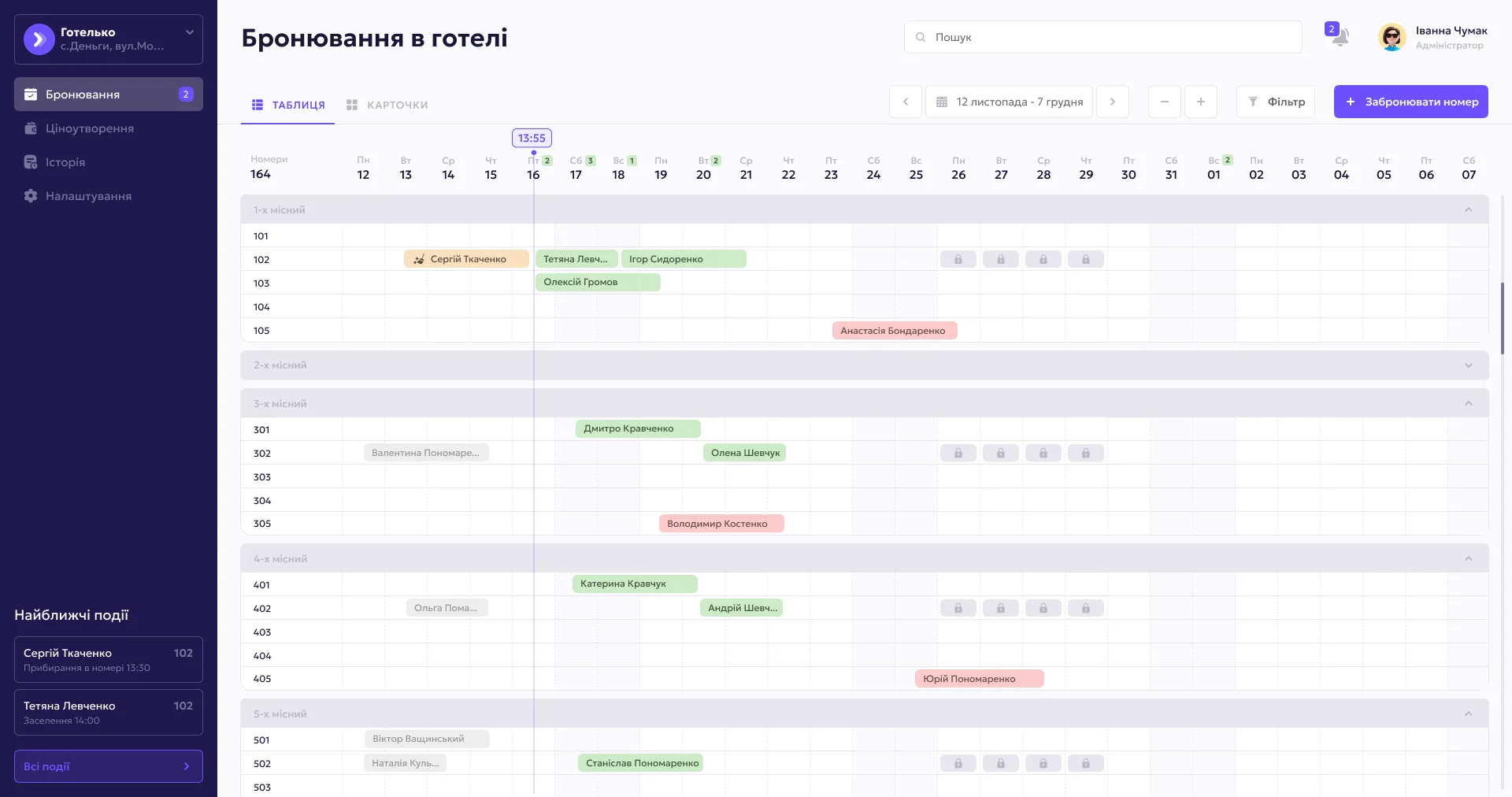
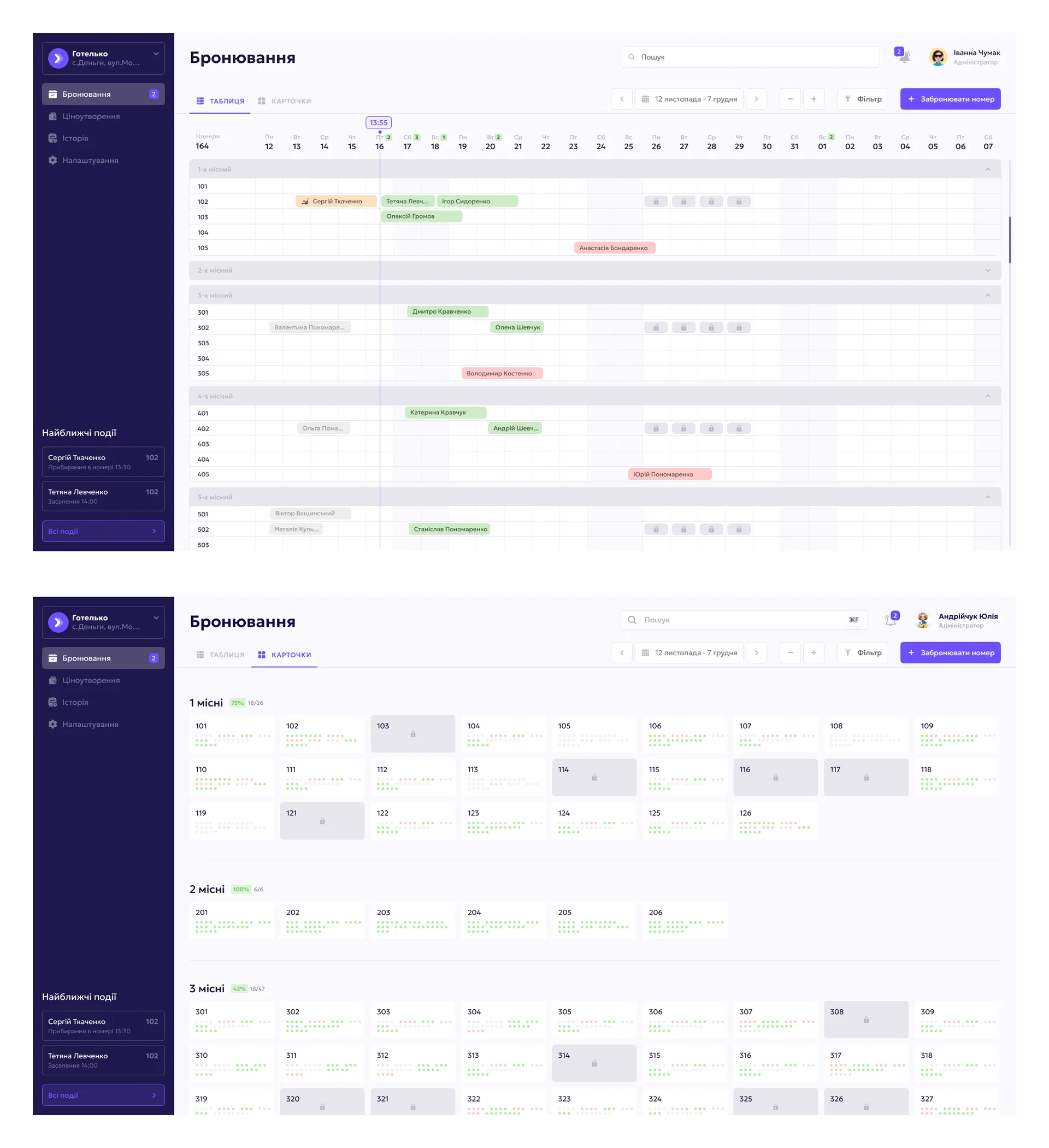
We engineered this exact combination of visual timeline slot management and automated rule engines in the resource management platform SIESTA. To let operators manage high-density daily schedules without cognitive overload, we paired an interactive timeline grid with a dynamic pricing rule builder that flags overlapping rate rules, backed by an immutable staff Activity Log filterable by timestamp or operator profile:
3. 2-Click Multiloading (Ride-Sharing Batch Optimization)
Profit margin in NEMT scales through Multiloading—grouping three ambulatory or wheelchair patients from adjacent zip codes heading to the same 08:00 AM DaVita dialysis clinic into a single van. Our UX architecture automatically clusters compatible trips along a geographic corridor (within a 2.5-mile detour radius), verifies physical cabin capacity (ensuring two wheelchairs fit the specific vehicle layout), and previews adjusted ETAs before the dispatcher clicks `Assign Batch`.
Driver Mobile App UX (iOS/Android): Glare-Proof Thumb Zone Controls & Offline-First EVV Signatures
Even the fastest dispatch console fails if the nemt driver app interface design frustrates drivers in the field. US medical transport drivers range from 42 to 64+ years old; they navigate heavy city traffic, assist frail passengers with 4-point wheelchair tie-downs, and frequently operate inside hospital underground garages with zero cellular signal.
1. High-Contrast Cab Ergonomics & Step-by-Step Driver Workflows: The JetAgro Case Study
Generic mobile apps fail in vehicle cabs because low-contrast typography and tiny buttons cause mis-taps on vibrating roads. Every primary status action (`En Route`, `Arrived at Pickup`, `Patient On Board`, `Drop-Off Completed`, or `No-Show`) must feature a minimum 56–64px touch target positioned squarely inside the one-handed Thumb Zone.
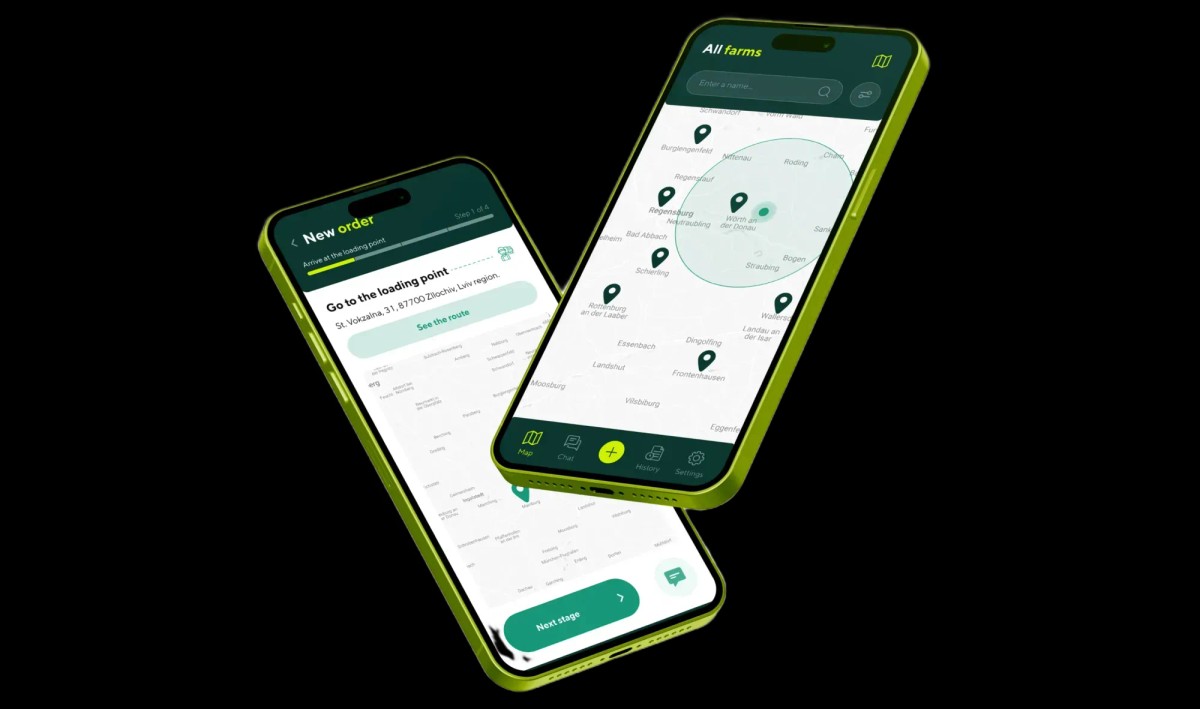
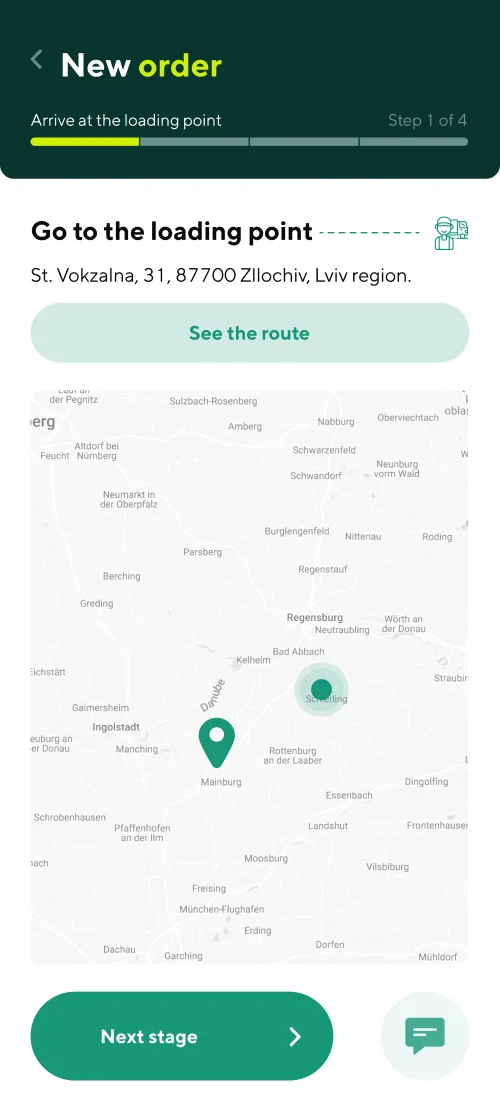
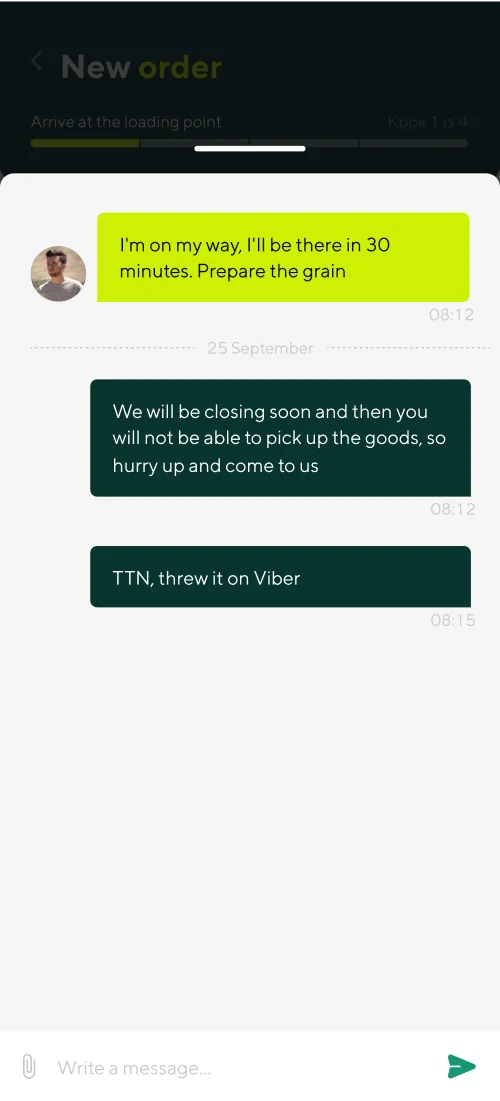
We designed this exact end-to-end mobile logistics architecture—combining live GPS route mapping, multi-stop status progression, and cab-optimized ergonomics—in the freight and transport mobile application JetAgro. To keep drivers focused on the road, we paired a high-contrast dark-emerald header and neon progress stepper (`Step 1 is 4`) with a streamlined active trip workflow: previewing the route in a slide-up map sheet (`See the route`), confirming or counter-bidding the freight rate in one tap (`Accept this price`), and advancing trip completion (`Completed`, `Search order`) alongside a dedicated quick-chat button in the Thumb Zone:


2. Real-Time Event Feeds & Contextual Dispatch Chat: Lessons from CheckLive
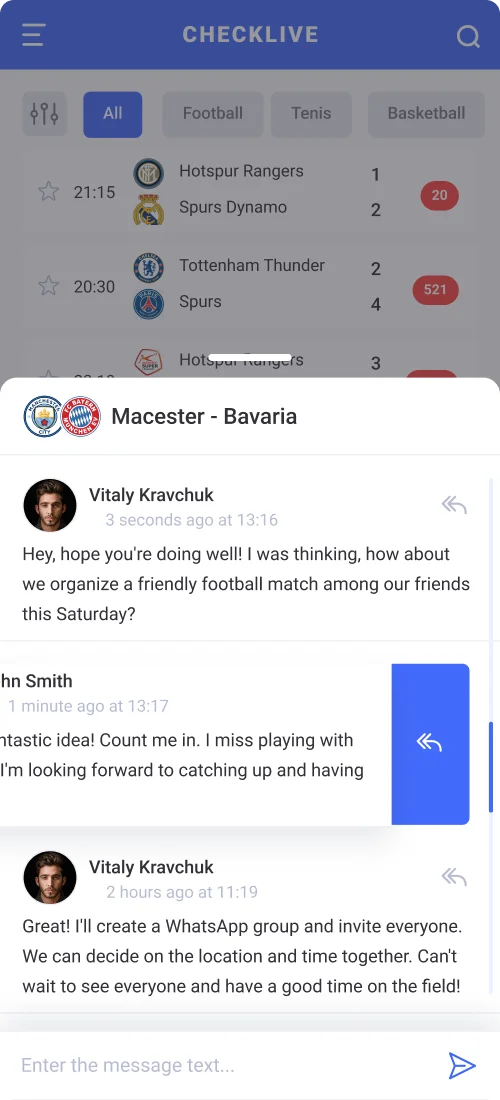
Phone calls between drivers and dispatchers during peak hours create massive bottlenecks. When a clinic changes a pickup entrance (`West Wing Discharge Door` instead of `Main Lobby`), drivers need an instant, contextual chat embedded directly inside the active trip card with swipe-to-reply gestures.
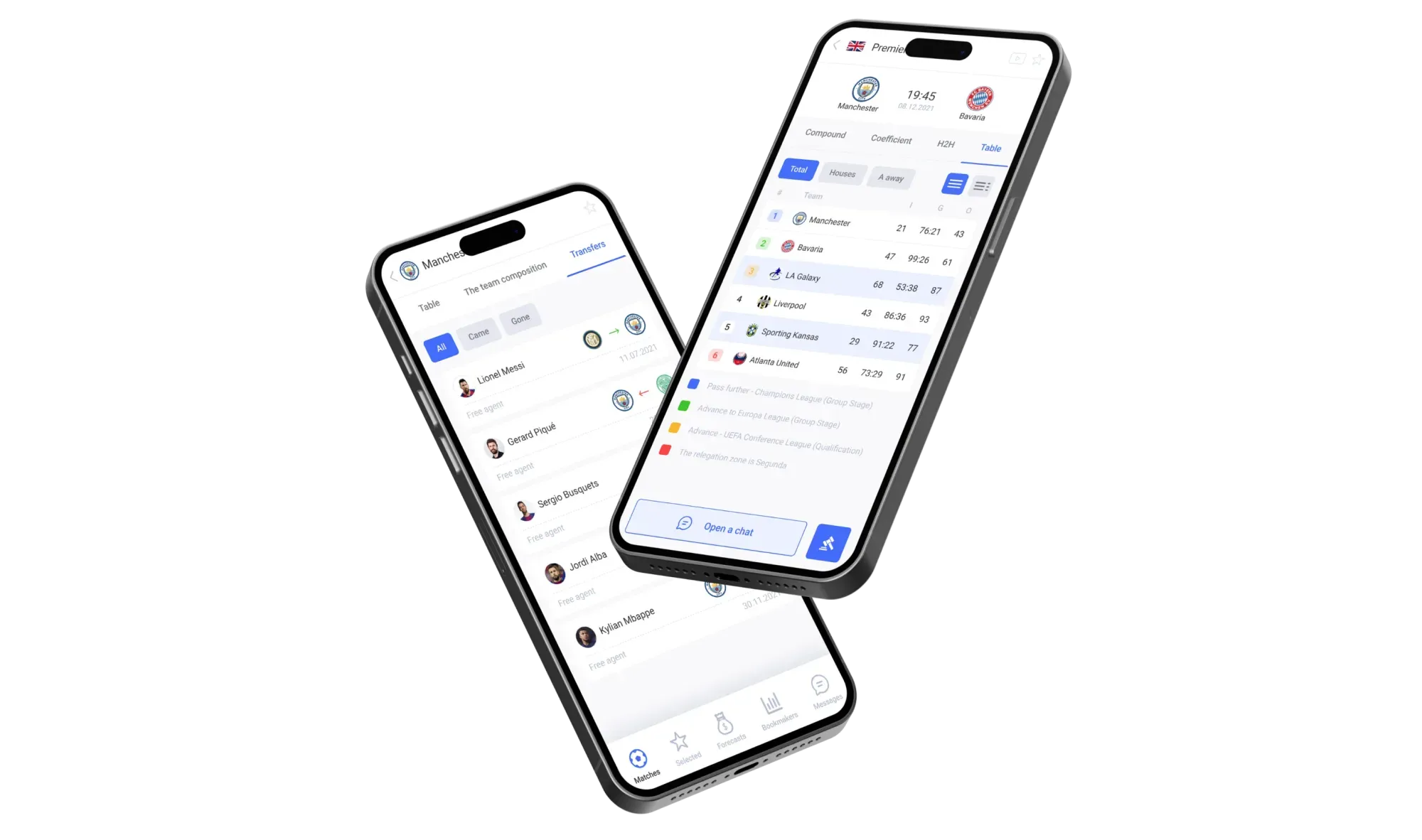
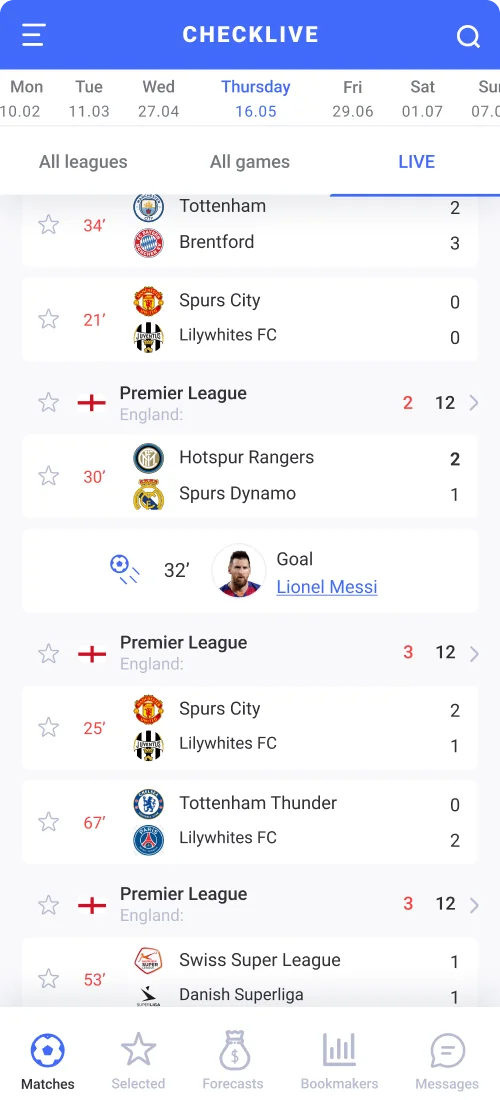
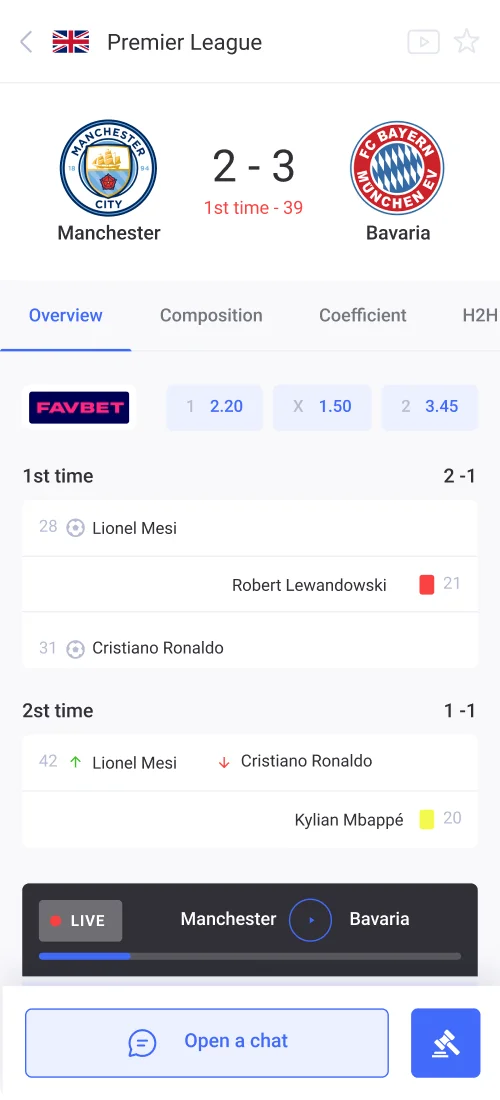
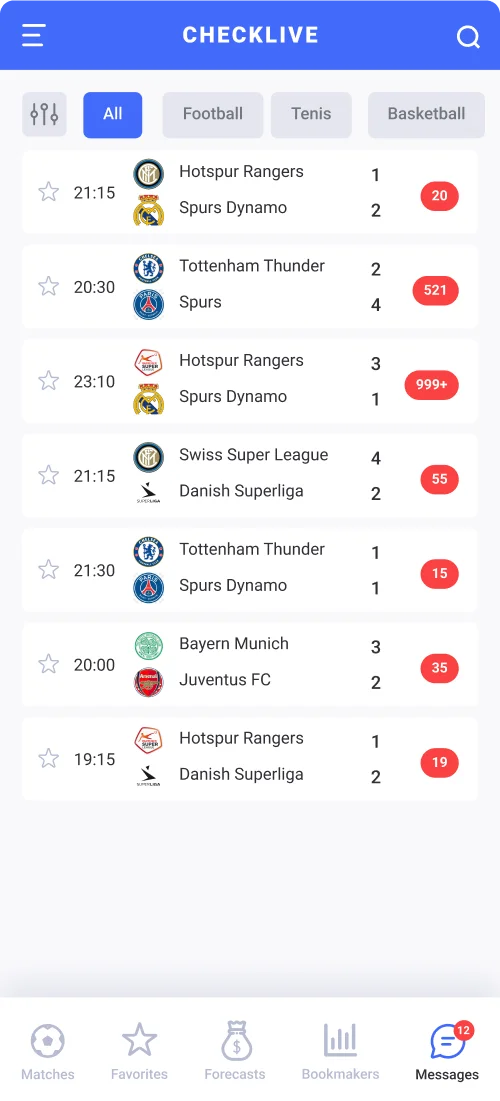
We engineered this high-velocity live status feed and event-linked messaging architecture in the mobile platform CheckLive. The interface synchronizes minute-by-minute live event feeds, a real-time event timeline with a sticky `Open a chat` button, an active chat directory with high-contrast unread message badges (`20 / 521 / 999+`), and a slide-up contextual chat drawer supporting instant swipe-to-reply interactions:
3. Zero Claim Denials: Offline-First SQLite Queuing, Digital Signatures & Guarded No-Shows
To eliminate rejected Medicaid and broker claims, we engineer the driver app around an Offline-First local database (SQLite / Realm) with background sync queuing:
Even with zero bars of cellular reception inside a hospital basement, the app records hardware GPS coordinates and immutable system timestamps.
The full-screen Digital Signature Pad captures the patient's or facility nurse's finger signature and odometer reading locally, encrypting and uploading the payload the second connectivity returns.
To prevent broker penalties for premature `No-Show` markings, the `Mark No-Show` button remains hardware-locked until the driver has waited inside the 150m pickup geofence for the mandatory 5-to-10-minute countdown AND captured a timestamped photo of the residence door via the in-app camera.
Healthcare Data Security: Strict HIPAA Rules, Encryption & Role-Based PHI Isolation
Any software handling US patient transport falls under federal HIPAA (Health Insurance Portability and Accountability Act) regulations. Combining a passenger's name, home address, Medicaid ID, and destination clinic (such as an oncology or behavioral health facility) constitutes Protected Health Information (PHI). Building a hipaa compliant dispatch interface is mandatory to avoid federal fines ranging from $100 to $50,000 per violation and immediate broker contract termination.
1. Enforcing the HIPAA 'Minimum Necessary' Standard Through Role-Based UI
HIPAA requires that each user role sees only the minimum PHI needed to perform their immediate task:
Driver View Isolation: Drivers see only the passenger's first name and last initial (Robert M.), pickup/drop-off addresses, mobility equipment requirements (Wheelchair + Ramp, Door-to-Door), and a Twilio number-masked call button. Drivers never see medical diagnoses (ICD-10 codes), Medicaid ID numbers, or past trip histories.
Ephemeral Trip Purging: Once a driver submits the drop-off signature, the trip card vanishes from the mobile view and purges from local device storage.
Dispatcher vs. Billing Specialist RBAC: Dispatchers manage live routing and mobility notes, while only authorized Billing Specialists access insurance authorization numbers, HCPCS/CPT procedure codes (`A0130`, `T2003`, `S0209`), and EDI 837P / 835 clearinghouse batch exports.
2. Technical HIPAA Security Rule Checklist & B2B Facility Portals
Every custom NEMT system we architect enforces five technical compliance safeguards:
Automatic Session Timeout: Web dispatch consoles automatically lock behind a PIN screen after 10 minutes of inactivity, blurring patient names on unattended monitors.
End-to-End Encryption & Signed BAA: All telemetry runs over TLS 1.3, while databases hosted on HIPAA-eligible AWS or GCP infrastructure (under a signed Business Associate Agreement — BAA) enforce AES-256 encryption at rest.
Blocked Screenshots & Isolated Camera Stream: The mobile app disables OS-level screen capture and streams door-verification photos directly to encrypted cloud storage without saving images to the phone's camera roll.
Immutable Audit Logs: Every view, edit, or export of a patient record logs `User_ID`, `IP_Address`, `Timestamp`, and modification reason.
Self-Service B2B Portal for Private-Pay Facilities: To help fleet owners reduce reliance on low-margin Medicaid brokers, we build dedicated B2B portals where hospital discharge planners and nursing homes book rides directly and calculate instant estimates. A strong example of structuring complex infrastructure services and B2B partner acquisition is the corporate platform we designed for WashService, where the hero screen immediately establishes the B2B value proposition alongside a direct trigger for the interactive project cost calculator (`Calculate Car Wash Cost`):

Cutting Dispatch Time by 34%: 3-Year ROI Math of Custom US Medical Transport Software
Investing in custom NEMT software or a comprehensive UX overhaul is ultimately an EBITDA decision. Removing multi-tab dispatcher friction, automating broker manifest ingestion, and deploying an offline-proof driver app transforms fleet unit economics within the first 90 days.
Boxed Per-Leg SaaS vs. Proprietary NEMT Platform: 36-Month Math for a 40-Vehicle Fleet
- Base Subscription + $0.50 Per-Leg Fees: $4,250/mo ($153,000 over 36 months)
- Revenue Lost to Claim Denials (5.2%): −$2,200/mo from app dropouts & missing EVV logs
- Broker SLA Late Pickup Penalties: −$1,000/mo (slow Will-Call reassignments)
- Dispatcher Headcount Required: 4 full-time dispatchers for 40 vehicles
- Platform Equity & IP Ownership: 0% (perpetual vendor lock-in)
- Per-Vehicle or Per-Leg License Fees: $0/mo (scale to 150+ vans with zero fee penalty)
- Turnkey UX Architecture & Custom Build: $28,000 (one-time CapEx investment)
- HIPAA-Compliant AWS Hosting + Mapbox: $180/mo ($6,480 over 36 months)
- Protected Revenue via Offline-First EVV: +$2,800/mo recovered through 99.4% clean claims
- Dispatcher Throughput Gain: −34% dispatch time (2 operators handle 40 vans)
For a US medical transport provider operating 30–40+ vehicles, a bespoke $28,000 NEMT platform pays for itself in under 4 months by eliminating $0.50 per-leg SaaS surcharges, preventing EVV claim denials, and unlocking direct private-pay hospital contracts.
8-to-10-Week Implementation Roadmap Without Halting Daily Fleet Operations
To transition your fleet without disrupting a single morning dialysis run, we execute delivery across four structured engineering sprints:
Weeks 1–2: Dispatch Shadowing & Interactive Figma Prototype. We audit screen recordings of your morning dispatch peak, eliminate redundant clicks, and build an interactive prototype of the 3-pane dispatch console and driver app. You can also benchmark your current digital presence against regional competitors today using our B2B Competitor Scanner.
Weeks 3–5: HIPAA Cloud Core, RBAC & Broker Manifest Parsers. Provisioning AWS HIPAA infrastructure under a signed BAA, building automated EDI/CSV/API ingestion for Modivcare, MTM, and Access2Care, and configuring granular role permissions.
Weeks 6–8: Offline-First Driver App (iOS/Android) & Billing Engine. Developing low-battery background GPS telemetry, guarded No-Show timers, local SQLite EVV signature caching, and EDI 837P claim generation.
Weeks 9–10: 5-Vehicle Canary Rollout & Full Fleet Cutover. Running parallel field tests on 5 vans for one week, onboarding drivers in 30 minutes, and retiring legacy SaaS subscriptions.
Key Takeaways
Ready to architect a custom NEMT platform or modernize your US medical dispatch software?
In the $13.5B US NEMT market, slow multi-tab dispatch software and unstable driver apps directly erode profit margins through broker SLA penalties and EVV claim denials.
Consolidating operations onto a 3-pane Split-Screen dispatch hub (at-risk queue + timeline Gantt grid + live vector map) with automated Multiloading cuts dispatch time by 34%.
An Offline-First driver mobile app with cab-ready Dark Mode, 64px Thumb Zone buttons, and local SQLite signature caching secures a 99.4% clean claim acceptance rate.
For a 40-vehicle fleet, a $28,000 turnkey custom NEMT platform reaches full break-even in 3.9 months and saves over $233,000 across 3 years compared to per-leg SaaS pricing.