Custom CRM & Automation
Protecting Customer Databases from Theft: Role-Based Permissions & Zero-Trust CRM Architecture to Prevent Lead Leaks
Why NDAs fail to stop lead theft when sales reps have access to raw phone numbers and CSV exports
A company's most valuable asset isn't its office equipment or even its current cash balance—it is the proprietary customer database built over years of paid acquisition. Yet in 9 out of 10 small and mid-sized businesses, that asset is guarded by nothing more than a paper Non-Disclosure Agreement (NDA) and employee goodwill. Global cybersecurity benchmarks from the Verizon Data Breach Investigations Report (DBIR) and the Ponemon Institute Insider Threat Report reveal that over 60% of departing sales reps exfiltrate client lists, pricing sheets, or pipeline records, with the vast majority of theft occurring inside the 14-to-30-day window before resignation.
By the time a founder discovers that a former top producer joined a direct competitor and is actively undercutting quotes across the top 50 wholesale accounts, legal action is rarely effective: proving spreadsheet copying in court without cryptographic audit logs is nearly impossible. In this engineering guide, we break down how to prevent sales reps stealing leads through Zero-Trust architecture, how to implement granular crm role based access control, how to hide phone numbers in crm interfaces via WebRTC Click-to-Call, and how to prevent customer database export permanently.
Anatomy of a Data Leak: How Sales Reps Exfiltrate Databases from Google Sheets and Boxed Cloud CRMs
Achieving true client data security for small business operations starts with recognizing how insider leaks actually happen. Departing sales reps never 'hack' servers—they exploit legitimate UI features that off-the-shelf software leaves wide open.
1. The Three Classic Exfiltration Vectors: Google Drive Sync, List Pagination & Clipboard Scraping
The first and easiest vector is Google Sheets and local Excel workbooks. Even if you disable downloading and printing in Google Drive settings for 'Editors' (a permission reps must have to update deal statuses), any user can press `Ctrl+A → Ctrl+C` in 4 seconds and paste all 8,000 customer rows into a personal sheet.
The second vector is standard cloud SaaS CRMs on entry and mid-tier plans. In most boxed platforms, sales reps can view the master contact directory. Even when the `Export to CSV` button is hidden, a departing employee simply sets list pagination to 200 rows per page and scrapes the entire database in 15 minutes using a Chrome extension or screen capture.
2. Unmanaged Personal Smartphones (BYOD) & Lingering Auth Sessions
The third leak vector is client communication via personal WhatsApp, Telegram, or SMS on employee-owned phones. When customer chats happen outside a centralized CRM gateway using a rep's personal SIM card, every buyer contact, specification sheet, and relationship history walks out the door with the employee. Worse yet, many cloud tools keep mobile browser tokens alive for days after an employee is terminated unless an administrator manually revokes active sessions.
3. Security Comparison: Spreadsheets vs. Boxed SaaS CRM vs. Bespoke Zero-Trust CRM
Below is an engineering comparison of insider-threat defenses across three architectures. Explore our full system deliverables in the Custom CRM & Financial Analytics hub.
| Insider Threat Vector / Security Control | Google Sheets / Excel | Boxed SaaS CRM (Standard Tiers) | Bespoke Custom CRM (Zero-Trust Architecture) |
|---|---|---|---|
| Bulk Database Export (CSV/XLSX) | 3 seconds (full access to all tabs and rows) | Often enabled by default or accessible via API | Hard-blocked at API layer (zero export endpoints for reps) |
| Raw Phone Number & Email Visibility | 100% exposed in plain text | Exposed inside contact cards (easy to photograph) | Server-side masking `+1 (555) -42`* + WebRTC dialing |
| Database Scope Visible to One Rep | 100% of historical company accounts | Usually full directory or entire regional pipeline | Strict Row-Level Security (only active assigned deals) |
| Response to Opening 50+ Cards Rapidly | Zero detection (no view logs exist) | Audit logs locked behind expensive Enterprise add-ons | Instant session lock + real-time Telegram alert to CEO |
| Messenger & Call History Ownership | Stored on reps' personal smartphones | Relies on fragile third-party plugins | Built-in omnichannel proxy chat without exposing numbers |
Zero-Trust Architecture: Server-Side Contact Masking & 1-Click WebRTC Calling
Modern enterprise security operates on Zero-Trust ('Never trust by default, verify every request'). Applied to a sales floor, Zero-Trust establishes a simple engineering rule: to call a prospect, negotiate a deal, and issue an invoice, a sales rep never needs to see the customer's raw phone number or email address.
1. How Backend Payload Masking & WebRTC Click-to-Call (Twilio, Ringostat, Binotel) Work
When you decide to hide phone numbers in crm views, masking them with frontend CSS is useless—anyone can press `F12 → Inspect Element` and read the raw digits in the DOM. True security requires Backend Payload Masking. Our PostgreSQL API returns only a masked string (`+1 (555) *-89`) alongside an internal UUID (`contact_uuid_9481`) to the browser.
Next to the masked string sits a green '1-Click Call' (Click-to-Call) button. When clicked, the CRM backend sends a server-to-server API request to your cloud PBX (Twilio Proxy, Ringostat, or Binotel), bridging the rep's headset to the customer via browser WebRTC in 1.2 seconds. The rep conducts the call, logs notes, and sends templated SMS/Telegram updates inside the CRM—without ever seeing the underlying phone number.
2. Securing High-Value Fintech Lead Intake on Mobile in the Kredit24 Case Study
Contact data security is especially critical in fintech, lending, and insurance, where customer acquisition cost (CAC) is steep and leaked borrower applications directly destroy conversion.
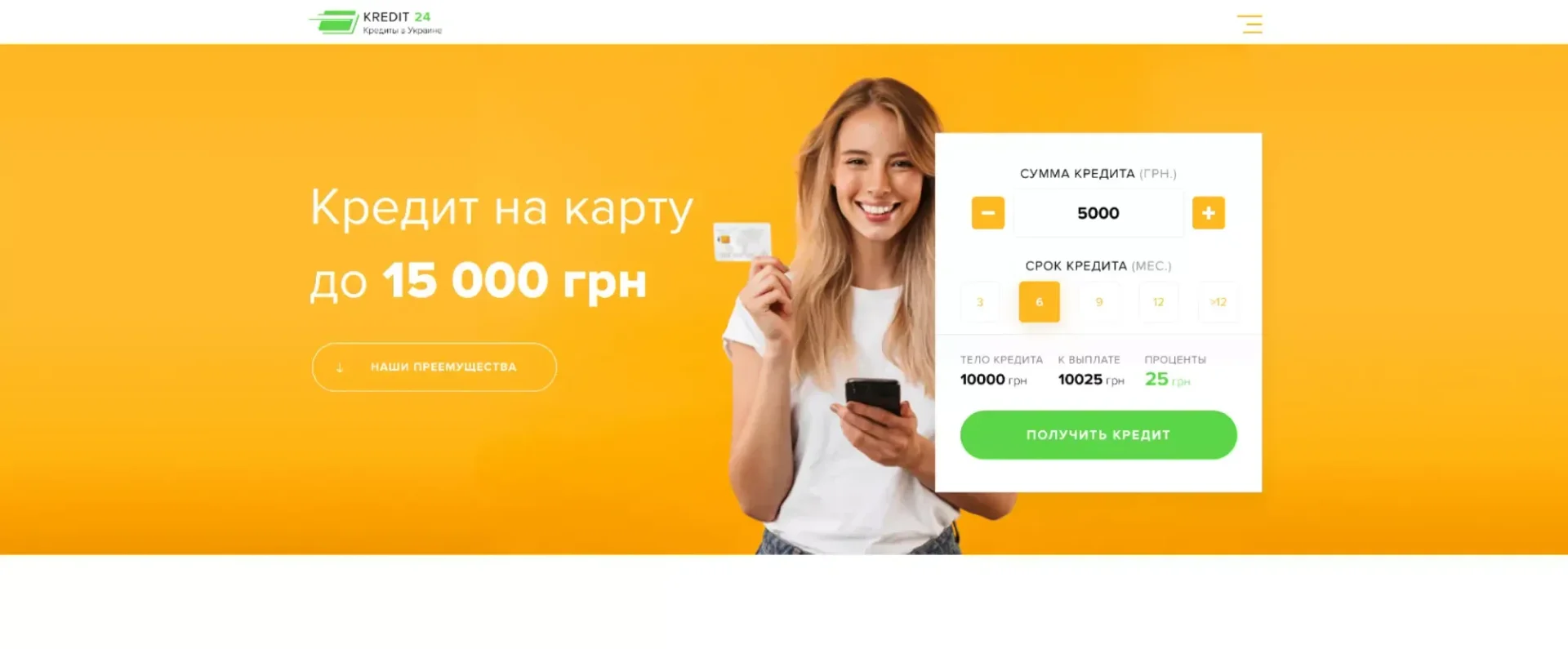
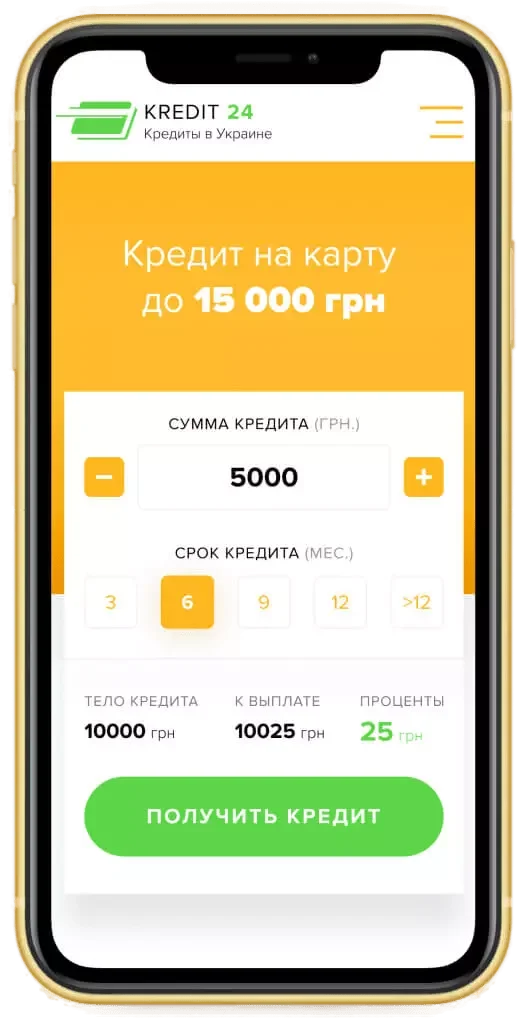
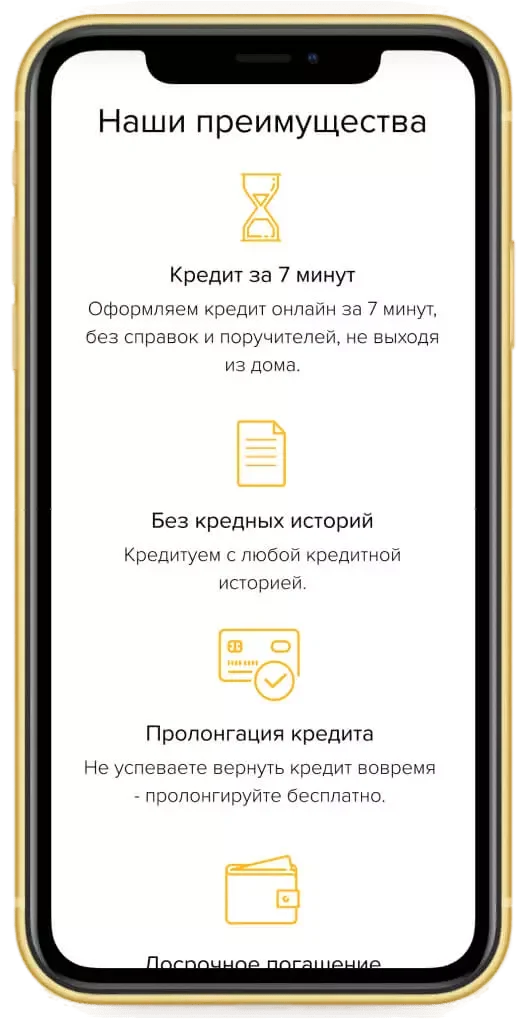
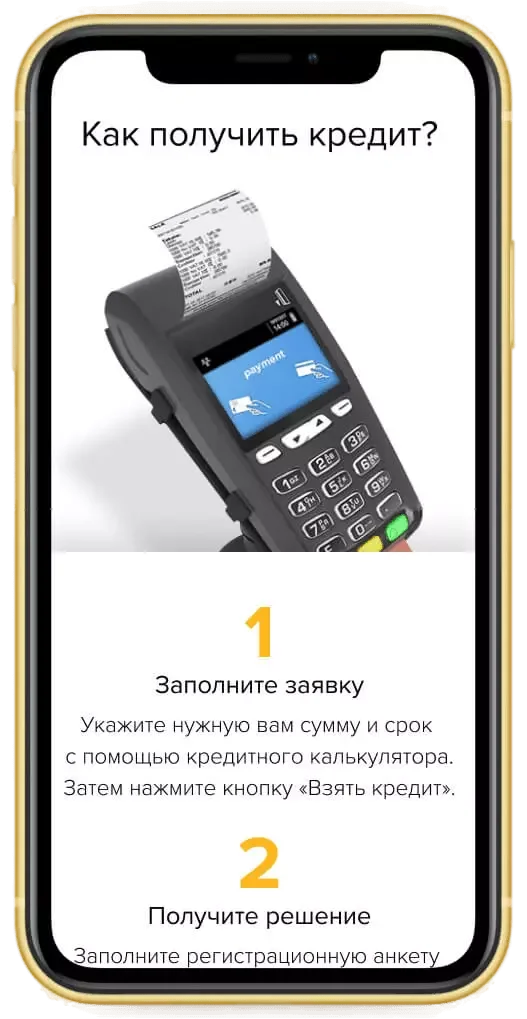
When designing the mobile and desktop architecture for the online lending platform Kredit24, we structured the borrower funnel so loan calculator parameters, lender selection, and applications transmit over encrypted channels directly into the scoring engine—bypassing manual spreadsheets or exposed operator lists altogether. On a 375px smartphone screen, applicants configure loan amounts and terms inside the thumb zone, review service benefits and the 3-step payout guide, and compare verified lender offers with calculated principal, interest rate (`0.3%`), and a 1-tap 'Apply Now' CTA:

Granular Role-Based Access Control (RBAC): What Trainees, Senior Reps, Finance & Founders See
The second pillar of lead theft prevention is granular crm role based access control (RBAC) combined with PostgreSQL Row-Level Security (RLS). Instead of binary 'Admin vs. User' permissions, a custom CRM enforces field-level and row-level isolation across every department.
1. Isolating Lead Pools: Why Junior Reps Must Never Browse Your Master VIP Directory
In a custom-engineered CRM, every role operates inside a strictly scoped data perimeter:
Trainee / Cold Caller Role: receives leads one at a time via an automated Round-Robin queue; the next lead unlocks only after the current call disposition is logged. Global search and historical archives are completely disabled.
Account Executive Role: views only actively assigned deals and personal commission metrics. Phone numbers remain masked, and wholesale cost-of-goods columns are hidden.
Warehouse / Logistics Role: sees only SKUs, weights, packaging notes, and shipping waybill numbers—zero pricing or buyer contact details.
Finance Role: reconciles invoices, cash flow, and accounts receivable without access to lead export tools.
Founder (Super-Admin) Role: the sole profile authorized to view real-time P&L dashboards and trigger 2FA-protected encrypted backups.
2. Academic Papers Case Study: Hermetic Contact Isolation Between Buyers and Specialists
Service marketplaces and specialized agencies face a constant disintermediation threat: if a client and a contractor exchange personal phone numbers on Order #1, all repeat business bypasses the platform.
We solved this exact role-isolation challenge during the platform and client portal redesign for Academic Papers. We engineered a self-contained order workspace (`Order #9372037`) featuring 6 functional tabs (`Details`, `Messages`, `Revisions`, `Files`, `Feedback`, `Invoices`) and a dedicated proxy chat toggle between the assigned writer and customer support (`Writer` / `Support`). Clients and writers collaborate, exchange manuscript drafts, and manage revisions seamlessly inside the portal while the architecture completely blocks the exposure of personal phone numbers, email addresses, or external messengers:

Logging Every Click: Automated Telegram Anomaly Alerts on Suspicious Browsing or Scraping
Even when a senior sales manager requires broader pipeline visibility to handle escalations, their activity must never go unmonitored. We embed a Behavioral Velocity Rate Limiter and an immutable audit trail directly into the CRM core.
The financial cost of a single sales rep stealing your client list vs. investing in a Zero-Trust custom CRM
- Time required to copy entire database before quitting: 5 seconds (Excel) to 15 minutes (unprotected CRM)
- Active accounts poached using your internal price history: 15% of database (~525 repeat buyers)
- Monthly net margin drop: −$6,300/mo (−$75,600 over 12 months)
- Ad spend required to re-acquire lost customer volume: $18,375 in extra Google/Meta Ads budget
- Forensic proof available for legal recovery: 0% (no cryptographic view or export logs)
- Sales rep access to raw phone numbers & emails: 0% (all calls routed via 1-click WebRTC proxy)
- Attempted rapid card scraping before resignation: Instant session freeze on Card #21 + Telegram alert to CEO
- Employee offboarding / revocation time: 1 second (instant JWT token invalidation across devices)
- Clients lost when a senior rep leaves: 0 accounts (all history and contacts remain in-house)
- First-year net financial protection: +$68,100 in preserved margin after deducting build cost
Building a custom Zero-Trust CRM ($7,500) costs 10x less than the annual margin lost when a single departing sales manager walks out with your wholesale customer spreadsheet.
1. Velocity Rate Limiting & Automated Session Freeze
During normal operations, a sales rep opens 4 to 8 customer profiles every 10 minutes (since each profile involves a 2–3 minute call and note logging). When an insider attempts to manually photograph or scrape a database before resigning, their card-view velocity spikes to 15–30 profiles per minute.
Our backend security middleware tracks this velocity in real time: the moment any user opens more than 20 contact cards within 5 minutes without initiating a phone call, the system automatically:
Freezes the active user session and invalidates their auth token.
Fires an instant priority alert to the founder's Telegram bot: '⚠️ Security Alert: Rep Alex K. opened 22 customer cards in 4 mins from IP 194.44.x.x. Session automatically locked.'
2. Append-Only Activity Logs & NFC Hardware Token Auth in the SIESTA Case Study
To prevent front-desk or sales operators from sharing passwords, deleting bookings, or pocketing cash payments off the books, every mutation must be recorded in an immutable `Append-Only Audit Log`.
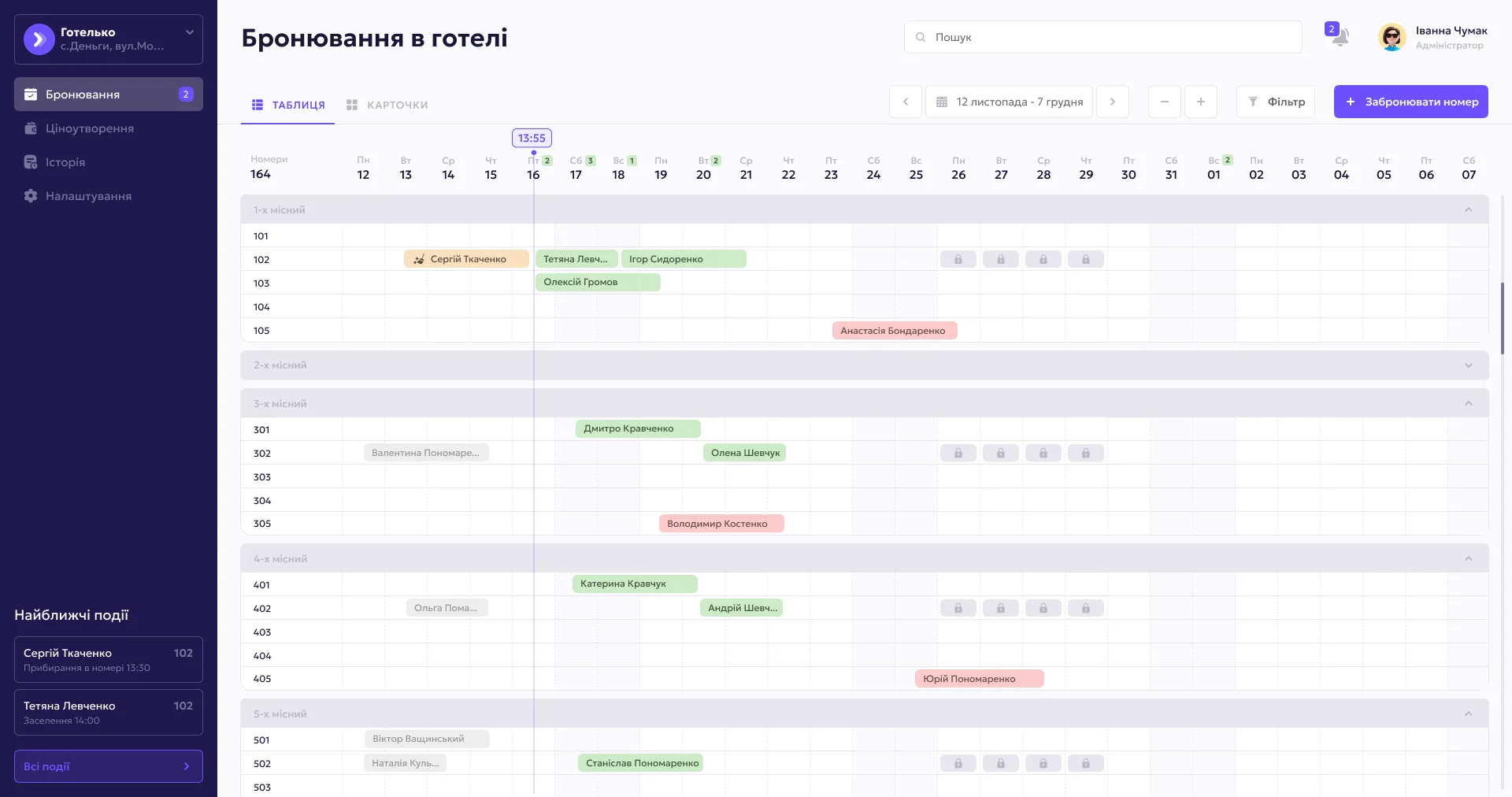
We engineered this exact staff accountability architecture inside the SIESTA hotel management system. At the login screen, staff authenticate rapidly using physical NFC security tokens when switching shifts. Inside the dedicated 'Activity History' module, management inspects a real-time ledger of every action—created or canceled reservations, rate overrides, check-ins, and check-outs—with instant filtering both chronologically ('By Time') and by individual employee ('By Staff Member'):

Legal & Infrastructure Security: Dedicated Single-Tenant Servers vs. Third-Party SaaS Clouds
The final layer of database protection is physical and legal infrastructure. When you store your customer records inside a mass-market SaaS CRM, your data resides in a shared multi-tenant cloud. A single compliance flag, billing dispute, or false abuse report can lock your company out of its own pipeline overnight.
1. Dedicated Single-Tenant EU/US Servers (Hetzner / AWS) & AES-256 Disk Encryption
With a bespoke system, 100% of the code and database infrastructure belongs to your company. We deploy your CRM on an isolated single-tenant virtual private server in GDPR-compliant EU or US data centers (Hetzner, AWS, DigitalOcean) with AES-256 disk-level encryption and field-level hashing. Zero local files ever sit on office computers.
2. The 7-Point '1-Second Offboarding' Checklist (Instant Kill-Switch)
Instead of spending an hour changing shared passwords when an employee leaves, a custom CRM gives the founder a 1-Click Offboarding Kill-Switch:
Instant JWT & Session Revocation: deactivating a user terminates their desktop and mobile sessions in 0.1 seconds.
Automated VoIP Credential Revocation: disables the employee's SIP telephony extension simultaneously.
1-Click Pipeline Reassignment: transfers all active deals and scheduled callbacks to remaining team members with zero dropped leads.
Office IP Whitelisting & VPN Enforcement: blocks linear sales reps from logging into the CRM outside office hours or from unrecognized home IP addresses.
Dynamic Screen Watermarking: renders a subtle, semi-transparent overlay with the logged-in user's name and IP across the data grid—instantly identifying the culprit if someone photographs the monitor with a smartphone.
Strict `Cache-Control: no-store` Headers: guarantees zero customer data remains cached in browser history after tab closure.
Immutable Off-Site Backups: hourly encrypted snapshots replicated to a separate storage vault. To quantify your current spreadsheet exposure and calculate your transition ROI, run a 2-minute check in our Excel-to-CRM Diagnostic Tool.
Key Takeaways
Ready to lock down your customer database against insider leaks and spreadsheet copying?
Over 60% of departing sales reps copy customer lists during their final 14–30 days when businesses rely on Google Sheets or standard cloud CRMs with exposed phone numbers.
True lead-theft prevention requires Zero-Trust architecture: server-side phone number masking (`+1 555 ***-**42`) paired with 1-click WebRTC calling so raw digits never reach the browser.
Granular Role-Based Access Control (RBAC) enforces row-level isolation so reps view only their active assigned deals without access to master archives or wholesale margins.
Behavioral velocity rate limiters automatically freeze sessions and alert the founder in Telegram the moment an account opens more than 20 customer cards in 5 minutes.